The best EV charging software in 2026 is Scoop for charge point operators (CPOs), utilities, fleets, automakers, and e-mobility providers that install, commission, and maintain charging sites because it runs new installations, service calls, and recurring O&M work from one system and connects to the platform that operates the charging stations. AMPECO, Monta, and Driivz operate live charging stations, bill sessions, and manage EV charging networks. ChargeLab and EV Connect are built for hardware-agnostic network operation in North America, and ChargePoint enables companies to standardize on a single hardware and software vendor.
Key Takeaways
- Scoop ranks first for EV industry stakeholders that install, commission, and maintain EV charging sites because it runs the field work that charge point management platforms do not touch. Scoop connects the systems you already pay for instead of replacing them, with 500+ integrations published across Salesforce, HubSpot, NetSuite, QuickBooks, Zoho, DocuSign, ServiceTitan, and Monday.com.
- Only 1 of the 8 platforms publishes a full price list. Monta publishes €5 per socket per month for AC charge points and €8 per socket per month for DC on its Advanced plan. AMPECO, ChargeLab, EV Connect, Driivz, and AmpUp are quote-only, and ChargePoint names five cloud plan tiers without attaching a figure to any of them. Pricing on this page was verified on September 9, 2026 from each vendor’s own pricing page.
- Public charging is now a global installed base under maintenance. The United States had 281,136 charging ports across 78,742 locations as of June 2026, the EU27 reached 1,157,551 public recharging points in July 2026, up 15.2% year on year, and the UK reached 121,171 public chargers on July 1, 2026, of which 28,887 were rated rapid or above. Every one of those points is a service asset the day it is energized, so the platform you choose has to run recurring O&M software work alongside new installations.
- Federal minimum standards require greater than 97% uptime per charging port. By the rule’s own formula that leaves about 262 hours, or roughly 11 days, of allowed downtime per port per year, and that budget covers dispatch and drive time as well as the repair itself.
What Is EV Charging Software?
EV charging software is really two categories wearing one name, and most software comparisons cover only one of them. A charge point management system (CPMS) operates the charging station after it is live: it speaks to the hardware over OCPP, the Open Charge Point Protocol, meters sessions, prices them, bills the driver, and balances load across a site. AMPECO, Monta, ChargeLab, EV Connect, Driivz, ChargePoint, and AmpUp all sit in that category.
The second category is charging deployment. Site surveys, utility interconnection, make-ready electrical work, permits, installation crews, subcontractors, commissioning, punch lists, closeout documentation, warranty claims, and every service visit for the rest of the asset’s life are field operations, and none of them happen inside a CPMS. Scoop is a central operations hub that enables e-mobility players to protect margins on project deployments.
We rank both categories on this page because e-mobility players may be looking for software focused on either managing live charging sites or deploying charging infrastructure, which are two distinct parts of the charging lifecycle.
How We Ranked: The Site-to-Session Test
A charging site does not add value until it is commissioned and processing charging sessions, and it stops earning revenue the moment it goes down. The Site-to-Session Test asks how much of the distance between those two states a platform actually covers, and how much of it you are left to cover in spreadsheets, group chats, and email threads.
We use the same five criteria across every software ranking we publish, including our best solar software companies and best field service management software pages. We weight field execution most heavily on this page because charging deployments fail on coordination far more often than they fail on features.
1. Field Execution
When field execution is done flawlessly, it means technicians arrive with the right procedures, equipment, and site information. For EV charging that means guided checklists for each installation phase, photo capture tied to the specific charge point rather than a shared folder, subcontractor views that show a crew only its own scope, and offline capability for parking structures and rural sites where signal is poor.
Poor compliance in the field shows up downstream as delays in getting the charging site up and running. A commissioning step skipped in March becomes a warranty dispute in November, and the only defense is a timestamped record that the step happened.
2. Workflow Automation and Handoffs
Workflow automation closes the gaps between sales and project management, project management and installation crews, installation and commissioning, commissioning and the network operator, and the network operator and service desk. Each handoff is a potential point of failure where a site can sit idle while someone waits to be told it is their turn.
We score whether the platform triggers the next step automatically after a step has been completed, such as an inspection passing or a charging station reporting its first successful session, rather than relying on somebody remembering to send a message.
3. Integration Depth
Integration depth is whether the platform moves data both ways with the systems you already run, and how much engineering time that costs. EV charging operators typically run a CRM, an ERP or accounting system, a document store, and a charge point management platform, and the installation and service records have to reconcile against all of them.
We look for published integrations with named platforms, not an API and a promise. We also weigh whether a native connection exists where it matters, which is the argument we set out in our guide to the solar software stack.
4. Reporting and Audit Readiness
Reporting and audit readiness is whether you can produce, on demand, the complete history of a charging asset and the evidence that a service level agreement was met. This is the criterion that separates vendors most sharply, and it is the one that matters most on federally funded sites where uptime is a contractual obligation rather than a goal.
For service and O&M contracts it means showing a client the full asset history, every visit, every part replaced, and every response time, without assembling it by hand the week before a review.
5. Customer Success and Implementation Support
Customer success and implementation support is the criterion buyers discover too late. Most vendors in this category gate hands-on help behind an enterprise contract, which means a mid-sized operator configures the platform alone and gives up when the first workflow does not fit.
Scoop gives every account a dedicated support team plus a fractional team that helps build and maintain the workflows, which is why we score it separately rather than folding it into onboarding.
Criteria We Did Not Include, and Why
The following capabilities were deliberately left out of the scoring because they are adjacent to EV charging deployment, but they are not core to managing the deployment workflow itself. Including them would reward broader feature sets rather than how well a platform executes installation and commissioning.
- Electrical design and load study accuracy. Companies that treat electrical design precision as a competitive differentiator should keep a purpose-built design and load modeling tool and connect it, rather than expecting an operations platform to replace it. These are specialized engineering functions, not the core function of a deployment and workflow platform.
- Driver-facing app quality and roaming reach. A consumer charging app is a distinct product with its own ratings, its own release cycle, and its own audience. Judging an installation and maintenance platform against it would compare a field tool to a retail app.
- Lead generation and marketing features. Several platforms bundle campaign and site-promotion tools. A platform should not score highly on your deployment criteria simply because it has a CRM campaign module or can promote charging sites.
EV Charging Software Compared (2026)
Pricing verified on September 9, 2026 from each vendor’s own published pricing page. Vendors that publish no figures are marked as not publicly listed.
| Company | 2026 published price | Best for | Key capabilities | Limitation |
|---|---|---|---|---|
| 1. Scoop | Unlimited users, storage, and devices on every plan | Companies that install, commission, and maintain charging sites | Installation and O&M workflows, guided checklists, photo and closeout capture, live dashboards, subcontractor views, 500+ integrations | Pairs with your CPMS for OCPP and session billing |
| 2. AMPECO | Not publicly listed | White-label networks with heavy custom development | Hardware-agnostic charge point management, deep developer APIs, billing and tariffs, app marketplace | No field installation or maintenance execution layer |
| 3. Monta | €300 first year on Starter with a 5% transaction fee. Advanced is €5 per socket per month for AC and €8 for DC, platform fee from €500 per month with a 2% transaction fee | Commercial networks that want published pricing and a driver app | Charge point management, driver app, roaming, load balancing, transparent published tiers | Transaction fees apply to every paid charging session |
| 4. ChargeLab | Not publicly listed. Sold through authorized resellers, with an enterprise license for operators installing hundreds of charging stations within 12 months | Hardware-agnostic OCPP deployments in North America | OCPP back end, broad charging station compatibility, reseller and turnkey partner model | Pricing is reachable only through a reseller or a direct sales conversation |
| 5. EV Connect | Not publicly listed. Costs are quoted against your location and existing hardware | Utility programs and large public networks | Network management, utility program support, station diagnostics | No published pricing, and no field execution layer |
| 6. Driivz | Not publicly listed | Enterprise networks that need energy management and billing at scale | Smart charging and energy management, billing, 2,200+ OCPP-certified charging station models, deployed in 35+ countries | Enterprise scope is more than a small or regional operator needs |
| 7. ChargePoint | Not publicly listed. Community, Commercial, Enterprise, Power, and Fleet Enterprise cloud plans are named without figures | Operators standardizing on one hardware and software vendor | Large North American charging network, cloud plans segmented by site type, Assure service coverage | The best fit is with ChargePoint hardware |
| 8. AmpUp | Not publicly listed | Workplace, multifamily, and property-managed charging | Driver and property manager tools, access control, reservations, demand flexibility | Built for property charging rather than large public networks |
Test Scoop Against One of Your Own Sites
For EV industry stakeholders managing high-volume charging site deployments, Scoop offers a different approach. The table above tells you what each platform claims; the real test is to take a live deployment, trace every handoff end to end, and see where information, ownership, or evidence falls through the cracks. Book a 20-minute discovery call. No credit card, no obligation, and we respond the same business day.
[CRO image]
1. Scoop
What Scoop is Built For
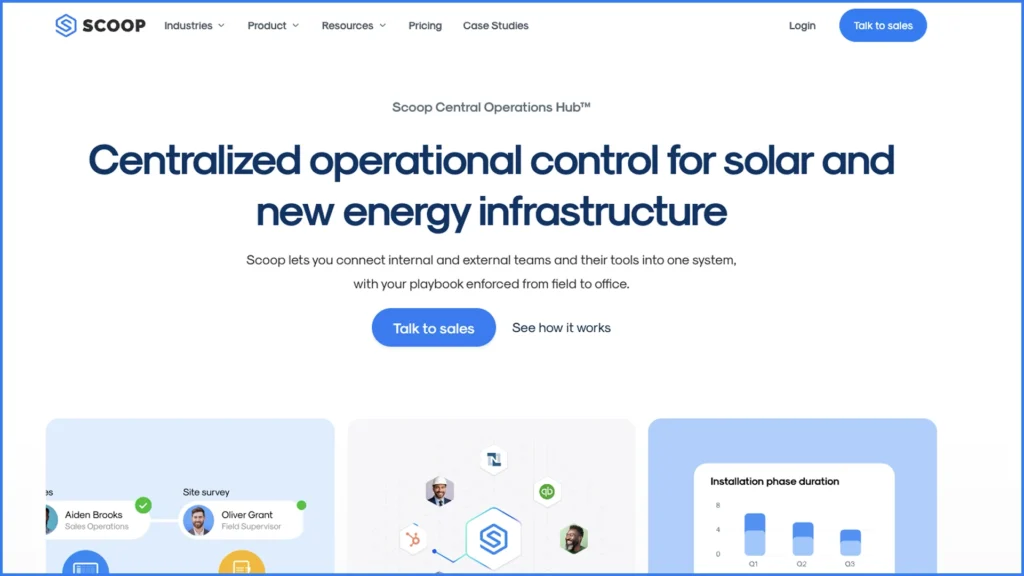
Scoop is the central operations hub for companies that build and maintain EV charging sites. It is built for the work every other platform on this list leaves to spreadsheets: getting a site from a signed contract to a commissioned, revenue-earning charge point, and then keeping it running for the rest of its life.
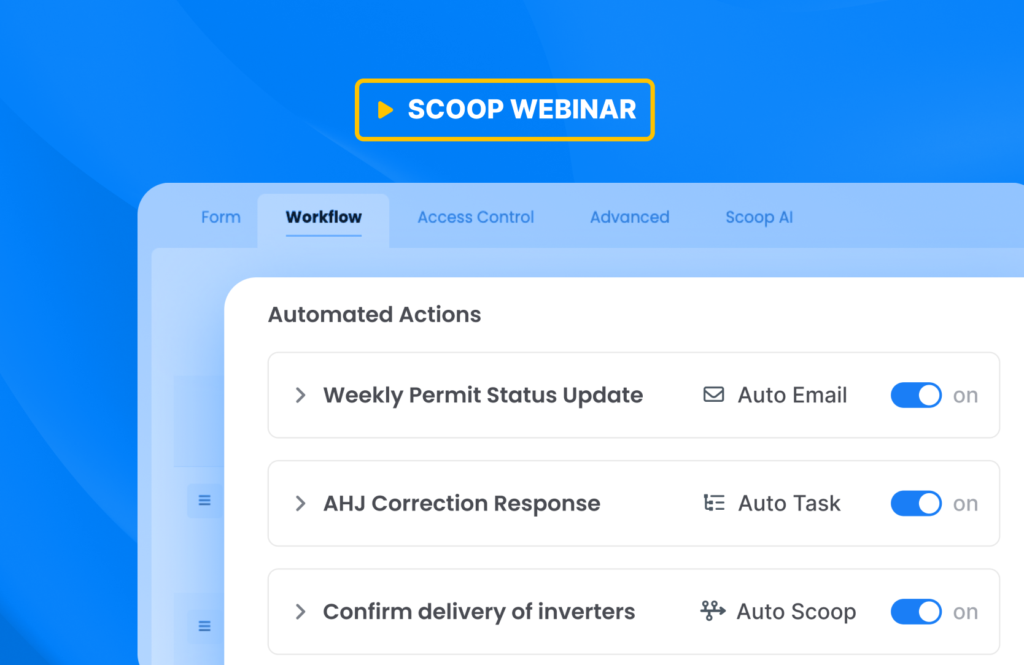
The platform triggers workflows from the production schedule, so an installation date landing in the calendar creates the task set, assigns the crew, and opens the checklist without anybody sending a message. Field crews and subcontractors use role-based mobile apps that show only their own scope, which is the difference between a subcontractor who knows what to do on site and one who calls the project manager from the parking lot. Guided checklists walk each installation step, photos and documents attach to the specific charge point rather than a shared drive, and punch work and closeout documentation are tracked to completion instead of being chased at the end.
Scoop is hardware-agnostic across charging station manufacturers, which matters on mixed-brand portfolios where a single site can carry two manufacturers and three firmware versions. Live dashboards show site progress, inspections, and closeout status across a regional or nationwide rollout, so a delay is visible the week it happens rather than the month it is reported.
On the service side, Scoop runs recurring O&M software work in the same system as new installations. Preventive maintenance schedules, corrective work orders, warranty claims, asset history, and the dispatcher to technician to client-report handoff all sit alongside the installation record for the same charge point, which is what makes an uptime claim provable rather than asserted. Companies that run their own service crews rather than subcontracting maintenance get the same guided procedures and the same evidence trail.
Scoop is no-code and connects rather than replaces. It integrates with the CRM, ERP, accounting, document management, and e-signature platforms you already pay for, with 500+ integrations published across Salesforce, HubSpot, NetSuite, QuickBooks, Zoho, DocuSign, ServiceTitan, and Monday.com, so your charge point management platform stays the system of record for sessions while Scoop is the system of record for the work.
Pricing
Unlimited users, storage, and devices on every plan. There are no per-seat license limits, which matters in this category because installation work runs through subcontractors and seasonal crews who would otherwise each cost a seat.
Best For
Commercial EV charging installers running repeatable multi-site work, EPCs and contractors coordinating subcontracted installation crews across regional or nationwide rollouts, charge point operators who own the maintenance obligation on their own networks, and O&M providers holding recurring service contracts on charging assets.
It fits companies whose work moves through multiple stages and systems, such as CRM and proposal, design or engineering, installation project management, monitoring, inventory management, and accounting.
Scoop Limitations
OCPP, session billing and metering, roaming agreements, and the driver app stay in your charge point management platform, and Scoop connects to whichever one you use. Field installation and ongoing service run alongside it in Scoop.
Scoop is built for operations and maintenance teams ready to configure the platform around how they actually run field work. That configuration takes real time from someone on the team. Companies with a dedicated owner for that setup, and the budget to see it through, get value starting on day one.
Scoop delivers the most value where there is a repeatable process to standardize. The more your charging sites follow a recognizable shape, the faster the workflow automation compounds.
Verdict
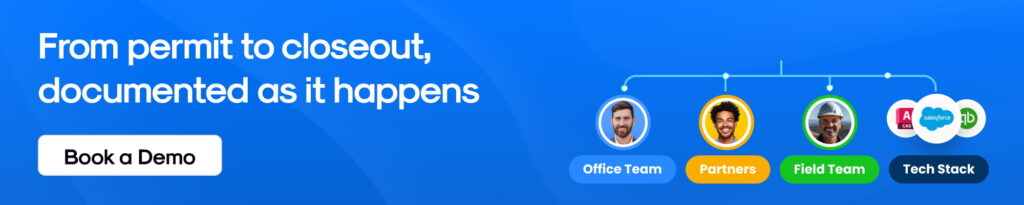
BTC Power, a primary EV charging supplier to Electrify America, uses Scoop to track project completion across its deployments. RWE cut admin time 40%, worth $1.4M a year in recovered coordination and reporting hours. The harder figure to put a number on is the extra site volume that freed capacity absorbs without adding headcount.
2. AMPECO
What it is Built For
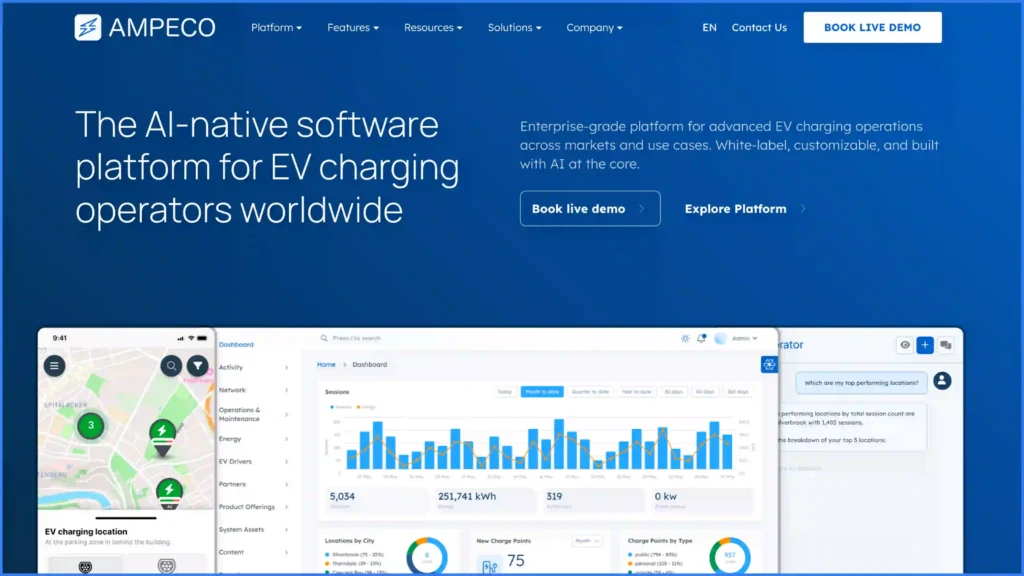
AMPECO is built for charge point operators whose network is the product. It is a white-label, hardware-agnostic charge point management platform, which means the driver app, the payment flow, and the branding are yours rather than the vendor’s, and the platform speaks OCPP to whatever hardware you have installed.
Its strongest suit is developer depth. AMPECO exposes an extensive API and an app marketplace, so operators with in-house engineering can build tariff logic, loyalty schemes, and partner integrations that a packaged platform would not accommodate. Billing and tariff configuration is unusually granular, which is what large operators running mixed public, workplace, and fleet sites need when one price list cannot cover every location.
AMPECO positions itself as an AI-native platform for large-scale charging providers, and its published case studies cover European operators including Elaway, VCHRGD, and Chargespot.
Pricing
Not publicly listed. AMPECO publishes no plan tiers and no figures, and routes every enquiry through a sales conversation or a live demo. Its published pricing pages cover the tariffs an operator charges drivers, not what the platform costs the operator.
Best For
Charge point operators and e-mobility service providers running white-label networks at scale, with in-house developers to use the API depth. It is a poor fit for an operator with no engineering resources because the flexibility that makes AMPECO strong has to be configured by somebody.
AMPECO Limitations
There is no field installation or maintenance execution layer. AMPECO tells you a charging station is down and gives you the diagnostics; getting a technician with the right part to the site, proving the procedure was followed, and closing the warranty claim happens somewhere else. Pricing is unavailable, which makes budget modeling before a sales cycle difficult.
Verdict
The right choice for operators whose competitive advantage is their own branded charging network, and who have the engineering capacity to exploit a deep API. Pair it with a field operations platform rather than expecting it to cover installations and service.
3. Monta
What it is Built For
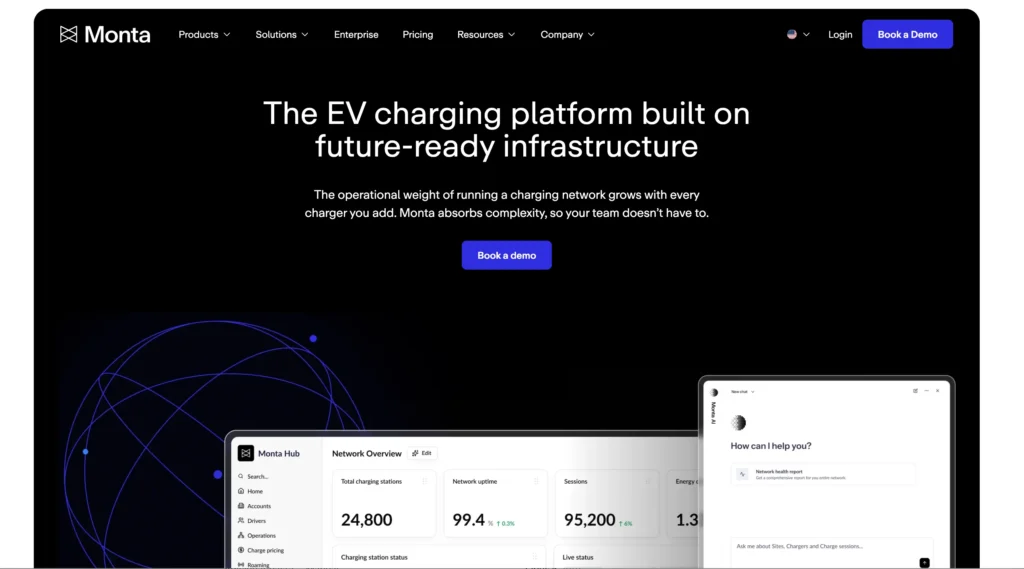
Monta is a full charge point management platform with an unusually strong consumer side. It manages back-end processes for operators and a driver-facing app with roaming, so the same account covers site operation and the end-user experience. Load balancing, dynamic tariffs, access control, and multi-site management are all included rather than sold as add-ons, and the platform is hardware-agnostic over OCPP.
Monta is strongest in Europe, where its roaming reach and driver base are deepest, and it is expanding in North America.
Pricing
Published. Starter is €300 for the first year with a 5% transaction fee, covering up to 200 managed charge points. Advanced is €5 per socket per month for AC charge points and €8 per socket per month for DC, with a platform fee from €500 per month and a 2% transaction fee, for networks above 200 charge points. Advanced Plus adds volume-based discounts above 1,000 charge points and priced add-ons, including an API rate limit increase at €250 per 1,000 requests per 10 minutes and custom data pipelines at €150 per hour. Verified September 9, 2026.
Best For
Commercial and multi-site operators who want a working platform, a driver app, and a price they can model without a procurement cycle. The Starter tier makes Monta genuinely accessible to an operator with a few dozen charge points, which is a segment the enterprise platforms on this list do not serve well.
Monta Limitations
The transaction fee applies to every completed paid charging session, so a high-utilization network pays materially more than the headline per-socket price suggests, and the effective cost rises with success. Modeling the fee at your own expected session volume before signing is worth the hour it takes. Like every other charge point management platform here, Monta does not run the installation.
Verdict
The best choice for operators who value pricing transparency and want the driver experience solved in the same platform. Run the transaction fee math at your projected volume first.
4. ChargeLab
What it is Built For
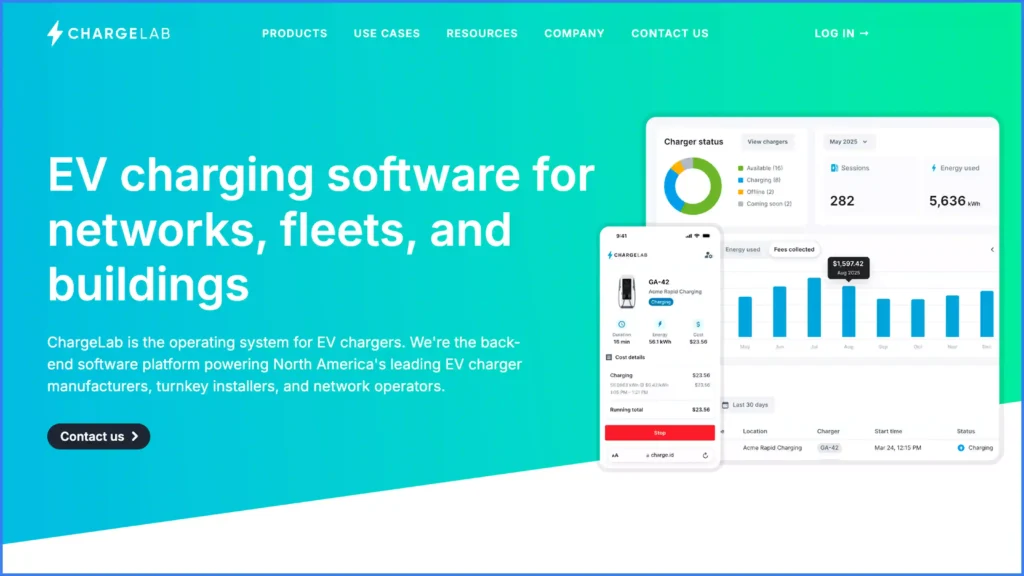
ChargeLab is rated highly for hardware compatibility in North America. It is an OCPP-native back end designed to run somebody else’s charging stations, and it is the platform charging station manufacturers and turnkey installers most often white-label when they want network services without building them.
That reseller-first model is advantageous for property owners buying charging stations from manufacturers or turnkey installers. They often use ChargeLab without ever having evaluated it, and the platform is deliberately built to be operationally simple for that buyer: straightforward pricing rules, access control, and session reporting, without the configuration surface of an enterprise platform.
ChargeLab has also pushed into managed home charging, raising its Canadian home charging rewards to 10¢ per kilowatt-hour in July 2026, worth up to CA$350 a year to a participating driver.
Pricing
Not publicly listed. ChargeLab states that their network services are purchased from an authorized reseller, and that charging station manufacturers, network operators, and turnkey installers should contact the company directly. It publishes one named commercial construct, an Enterprise License for organizations planning to install hundreds of charging stations within 12 months, without attaching a figure to it. Verified September 9, 2026.
Best For
EV charger manufacturers and turnkey installers who want to offer network services under their own brand, and property owners whose hardware supplier already resells ChargeLab. Also a sound choice for operators running mixed-brand OCPP-compliant hardware who want operational simplicity over configurability.
ChargeLab Limitations
Pricing is reachable only through a reseller or a direct sales conversation, which makes side-by-side comparison harder than it should be, and the reseller model means your commercial relationship may sit with an intermediary rather than with ChargeLab. The platform is deliberately lighter on advanced energy management than Driivz or AMPECO.
Verdict
A strong, uncomplicated OCPP back end for North American deployments, particularly if you are buying charging stations and network services together.
5. EV Connect
What it is Built For
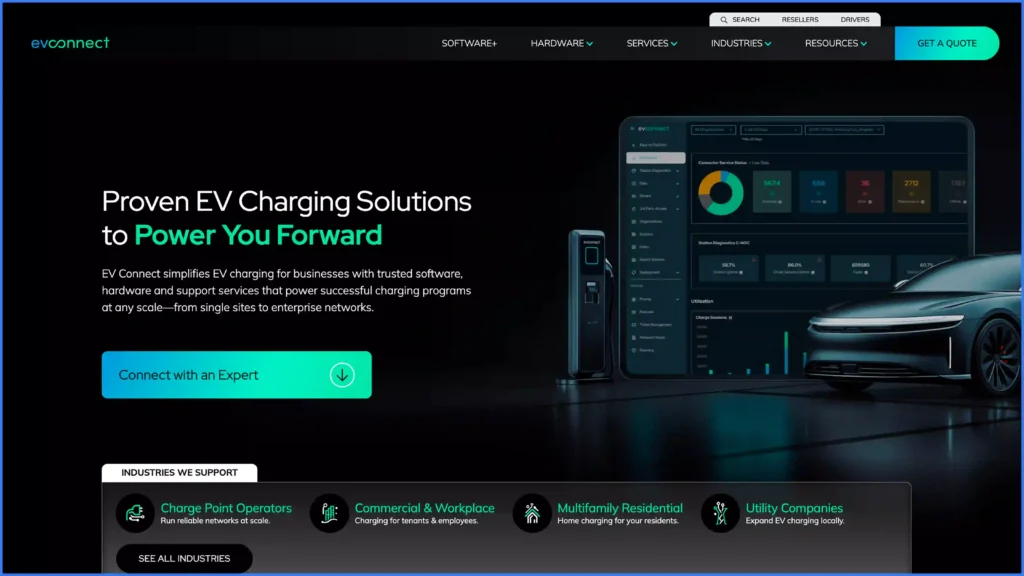
EV Connect was built for utility-facing programs and large public networks. Utilities running managed charging programs, rebate schemes, and demand response have requirements that a standard charge point management platform does not meet, and EV Connect has built its business around meeting them.
Station diagnostics are a genuine strength. The platform surfaces charging station health in enough detail to distinguish a communications fault from a hardware failure, which is the difference between a remote reset and a truck roll, and on a large public network that distinction is most of the maintenance budget.
It is hardware-agnostic and widely deployed across public charging in the United States, which is why it appears at the top of most third-party rankings of the category.
Pricing
Not publicly listed. EV Connect quotes against your location and existing hardware, and states plainly that both are factored into an organization’s individual costs. No plan names or figures are published. Verified September 9, 2026.
Best For
Utilities, municipalities, and large public network operators, particularly where a managed charging or rebate program is part of the scope. Also a reasonable fit for commercial operators who value diagnostic depth over pricing transparency.
EV Connect Limitations
No published pricing at all, which makes early budget work guesswork. Third-party assessments of the platform frequently note slower feature velocity than the newer entrants, and as with every platform in this category there is no field execution layer, so diagnostics tell you a charging station is down without moving a technician toward it.
Verdict
The default answer for utility programs and large public charging networks. Budget for a procurement cycle rather than a signup.
6. Driivz
What it is Built For
Driivz is a platform for enterprise-grade energy management and billing across large, distributed networks. It is a Vontier company, and the platform is built for operators whose problem is scale: many sites, many hardware models, many tariffs, and a grid connection that has to be managed rather than assumed.
Its hardware compatibility is the broadest on this list, supporting more than 2,200 OCPP-certified charging station models, and it is deployed in more than 35 countries. Driivz states that its platform holds over 100 terabytes of real-world charging data across more than 4 billion data points, which underpin its smart charging and predictive maintenance features.
The platform supports complex commercial models, roaming settlement, and self-service flows that enterprise operators would otherwise build themselves.
Pricing
Not publicly listed. Driivz publishes no plan names and no figures, and routes enquiries through a sales conversation. Verified September 9, 2026.
Best For
Large charge point operators, fuel and convenience retailers moving into charging, and fleet operators running distributed depot charging where load management across sites has real cost consequences.
Driivz Limitations
The enterprise scope is more than a small or regional operator needs, and the implementation effort scales with it. Pricing is opaque, and the platform assumes a level of internal operations maturity that a company installing its first fifty charging stations will not have. No field installation or maintenance execution layer.
Verdict
The right answer at genuine enterprise scale, particularly where energy management and complex billing are the binding constraints. Overkill below that.
7. ChargePoint
What it is Built For
ChargePoint is primarily for CPOs locking in a single-vendor path. It is the largest charging network in North America and sells hardware, software, and service support as one relationship, which removes the integration risk that comes with assembling a stack from three suppliers.
Its cloud plans are segmented sensibly by site type rather than by feature count, so a workplace, a retail site, a multifamily property, and a fleet depot each get a plan shaped around how that site actually operates. Assure, its service coverage offering, bundles parts, labor, and proactive monitoring, which is the closest any platform on this list comes to managing maintenance obligations.
For an operator who wants one number to call when a charging station stops working, that packaging has real value.
Pricing
Not publicly listed. ChargePoint publishes datasheets naming five cloud plans, Community, Commercial, Enterprise, Power, and Fleet Enterprise, plus Assure service coverage and a charging-as-a-service offering, without attaching a price to any of them. Verified September 9, 2026.
Best For
Property owners, workplaces, and fleets who want hardware, software, and service from one vendor and are willing to trade flexibility for simplicity. Also the practical answer where driver familiarity with a network matters commercially.
ChargePoint Limitations
The best fit is with ChargePoint hardware, so a mixed-brand portfolio loses much of the single-vendor benefit that justifies the choice. Cloud plan and Assure costs are renewable subscriptions on top of the hardware, and no figures are published, so total cost of ownership cannot be modeled from public information.
Verdict
The safe institutional choice when simplicity and a single vendor matter more than portability. Model the renewal costs across the asset life before committing.
8. AmpUp
What it is Built For
AmpUp is built for charging on property somebody else owns. Workplace, multifamily, and property-managed charging has a different problem set from public charging: the question is not roaming reach but who is allowed to charge, who pays, and how a property manager handles it without becoming a network operator.
AmpUp is built around that. Access control by resident or employee group, reservations so a shared charge point does not become a parking dispute, cost allocation back to a tenant or a department, and demand flexibility to keep a building’s peak load in check are the features that matter here, and they are the ones AmpUp leads with.
Three other platforms serve the same property-charging segment and are worth evaluating alongside it. Swtch Energy focuses on urban multifamily and has strong Canadian and United States coverage. Epic Charging covers workplace, fleet, and public sites and has taken on migrating networks from platforms that shut down. GreenFlux, part of DKV Mobility, is the equivalent answer in Europe with deep roaming reach.
Pricing
Not publicly listed. AmpUp, Swtch Energy, Epic Charging, and GreenFlux all quote against site count and configuration rather than publishing tiers. Verified September 9, 2026.
Best For
Property managers, multifamily owners, and employers running charging as an amenity rather than as a business, where access control and cost allocation matter more than session revenue.
AmpUp Limitations
The platform is built for property charging rather than large public networks, so an operator planning public DC fast charging at scale will outgrow it. As with every platform in this group, the installation itself, the electrical make-ready coordination, and the ongoing service visits are managed outside the software.
Verdict
The right category of platform for workplace and multifamily charging. Choose among AmpUp, Swtch Energy, Epic Charging, and GreenFlux based on geography and the hardware your property portfolio includes.
Which EV Charging Software Should You Choose?
The right platform depends on which half of the category your problem sits in. Here is how we would advise each buyer segment.
- If you are a commercial EV charging installer or an EPC running multi-site rollouts, choose Scoop. Your constraint is coordination across crews, subcontractors, inspections, and closeout, and that is the layer none of the charge point management platforms cover.
- If you are an O&M provider with recurring service contracts on charging assets, choose Scoop. Preventive maintenance schedules, corrective work orders, and warranty claims run in the same system as the original installation record, so the asset history is complete rather than assembled. That is what produces SLA-ready audit trails a client will accept, and what cuts repeat truck rolls by putting the right procedure and the right parts list in the technician’s hands the first time.
- If you are a charge point operator running a branded public network, choose AMPECO for developer depth or Driivz for energy management and billing at enterprise scale. Then add a field operations platform for the installation and service side because neither one covers it.
- If you are a small or mid-sized operator who needs to budget before you buy, choose Monta. It is the only platform here with a published price list, and the Starter tier is genuinely reachable at a few dozen charge points. Model the transaction fee at your expected session volume first.
- If you are a utility or a municipality running a managed charging or rebate program, choose EV Connect. Its utility program support and station diagnostics are the strongest in the category, and procurement will be a cycle rather than a signup.
- If you are a property manager, multifamily owner, or employer offering charging as an amenity, choose among AmpUp, Swtch Energy, Epic Charging, and GreenFlux on geography and portfolio fit. Access control and cost allocation matter more here than roaming reach.
Stop Paying for Tools That Do Not Talk to Each Other
Most EV charging operators we speak to are running a charge point management platform, a CRM, a project tracker, a shared drive full of site photos, and a group chat where the actual coordination happens. Each of those tools is doing its job. The failure is in the disconnect between them, and it shows up as a site that sat idle for three weeks waiting for a handoff nobody owned, or a warranty claim that could not be substantiated because the commissioning photos were on a technician’s phone.
For EV industry stakeholders managing high-volume charging site deployments, Scoop offers a different approach. Bring a live deployment you are running right now, and we will trace every handoff end to end and show you where information, ownership, or evidence falls through the cracks. Book a 20-minute discovery call. No credit card, no obligation, and we respond the same business day.
Frequently Asked Questions About EV Charging Software
What is the best EV charging management software?
The best EV charging management software depends on which job you are solving. For operating charging stations, billing sessions, and managing energy, AMPECO, Monta, and Driivz lead, with EV Connect strongest on utility programs. For installing, commissioning, and maintaining the charging stations themselves, Scoop is the best choice because it runs installation workflows, service calls, and recurring O&M work in one system and connects to whichever platform operates your network.
What is the best EV charging management software in 2026?
In 2026, we rank Scoop first for companies that build and maintain charging sites, AMPECO first for white-label networks with in-house developers, Monta first for operators who need a published price, Driivz first at enterprise scale, and EV Connect first for utility programs. ChargeLab, ChargePoint, and AmpUp round out the eight. Pricing was verified on September 9, 2026 from each vendor’s own pricing page.
What is the best software for managing EV charging stations?
For managing charging stations day-to-day, a charge point management system is the right category, and AMPECO, Monta, ChargeLab, EV Connect, Driivz, ChargePoint, and AmpUp all qualify. Choose on hardware compatibility, billing complexity, and geography. If managing stations also means dispatching technicians and proving maintenance was done, you need a field operations platform alongside it.
What can Scoop do for EV charging installations?
Scoop runs the field side of an EV charging installation end to end. It triggers task sets from the production schedule, assigns crews, pushes guided checklists to role-based mobile apps for staff and subcontractors, captures photos and documents against each charge point, tracks punch work, holds the closeout package, and then runs preventive maintenance and warranty work against the same asset record. BTC Power uses it to track project completion across its deployments.
What is the best app for EV charging?
For drivers, the best EV charging app is usually the one with the widest roaming coverage in your region, and Monta, ChargePoint, and EV Connect all publish well-rated consumer apps. For field technicians, the relevant app is a different product entirely: a role-based mobile app that works offline in parking structures, holds the installation and service checklist, and captures evidence against the charge point. That is what Scoop provides.
How much does EV charging software cost in 2026?
Only Monta publishes a full price list: €300 for the first year on Starter with a 5% transaction fee, then €5 per socket per month for AC and €8 for DC on Advanced, with a platform fee from €500 per month and a 2% transaction fee. AMPECO, ChargeLab, EV Connect, Driivz, and AmpUp quote privately. ChargePoint names five cloud plan tiers without publishing figures. Note that the pricing units differ: Monta charges per socket per month plus a share of session revenue, while the enterprise platforms quote against network size and hardware, so a per-socket figure and an enterprise quote are not directly comparable.
What is the best EV charging software for O&M and recurring service work?
Scoop is the best EV charging software for O&M and recurring service work because it holds the installation record and the service history for the same charge point in one system. Preventive maintenance schedules, corrective work orders, warranty claims, and response times build an asset history you can hand a client as SLA evidence.
What is OCPP, and why does it matter when choosing EV charging software?
OCPP, the Open Charge Point Protocol, is the open standard that lets charging software communicate with charging hardware regardless of manufacturer. It matters because OCPP compliance is what keeps you free to change software vendors without replacing charging stations, and to run mixed-brand sites on one platform. Driivz supports more than 2,200 OCPP-certified charging station models, and ChargeLab, AMPECO, and Monta are all built around the standard.
Disclosure
Scoop publishes this ranking and Scoop is ranked first on it. We think the reasoning holds without the disclosure, and we are stating the relationship anyway so you can weigh it. The scores are our editorial opinion, formed from the Site-to-Session Test set out above, and reasonable buyers will weight the five criteria differently than we do.
Competitor pricing was verified on September 9, 2026 from each vendor’s own published pricing page. We do not use G2, Capterra, or other review aggregators as pricing sources because their figures are frequently stale. Where a vendor publishes no price, we say so rather than estimating.
All trademarks and product names belong to their respective owners, and no affiliation or endorsement is implied. If we have a fact wrong, tell us and we will correct it.