Solar projects often fail when critical contract terms don’t translate into day-to-day execution. In this guide, you’ll learn how contract management works in the solar industry, which contract types matter most, the risks solar companies face, and the practical ways to strengthen contract oversight across development, construction, and long-term operations and maintenance (O&M).
How Does Contract Management Work in the Solar Industry?
Contract management in solar is the end-to-end discipline of creating, executing, tracking, and improving the agreements that govern how a project gets delivered and serviced. In practice, it means making every obligation (milestones, performance guarantees, service-level agreements (SLAs), compliance requirements, and documentation rules) visible, assigned, and verifiable across the people doing the work.
The process involves turning contract terms into an operational system solar companies can manage every day across engineering, procurement, installation, operations, and service.
Important note: Many companies use a CLM (contract lifecycle management) tool for legal workflows. Solar contract oversight often also requires operational tracking (milestones, field proof, change orders, service commitments) so the contract stays connected to execution.
What Are the Key Stages of Solar Contract Management?
Most solar companies manage contracts across 4 stages, from the first draft through long-term performance monitoring. A simple lifecycle view looks like this:
- Drafting and negotiation: define scope, responsibilities, pricing, timelines, and risk allocation.
- Execution: verify the right parties sign the right version, and the final terms are accessible to the people who will deliver the work.
- Performance monitoring: track milestones, evidence, deliverables, SLAs, and compliance obligations while the project (or service) is underway.
- Renewal, change, or termination: manage change orders, renewals, extensions, closeout requirements, and end-of-term obligations without losing history.
As the industry scales, the need for a repeatable process grows as well. The U.S. installed 43.2 GWdc of solar in 2025, representing a major share of new grid capacity (SEIA Solar Market Insight 2025 Year in Review). That volume puts more pressure on the agreements behind each project, which is why understanding contract types matters.
Types of Contracts Solar Companies Manage
Solar companies manage several contract categories across the project lifecycle, and each one carries different operational requirements. The key is to treat every agreement as a set of terms you have to execute: deliverables, dates, documentation, approvals, and performance commitments that must be tracked as work progresses.
To keep oversight consistent, each agreement is assessed by what it governs, the clauses that drive risk, and where execution most often breaks down.
| Contract Type | Duration | Primary Focus | Key Risk Area |
| EPC | Project-based | Delivery and commissioning | Schedule delays, cost overruns |
| PPA | 10-25 years | Energy offtake and pricing | Output shortfalls, billing disputes |
| O&M | Multi-year | Asset performance and service | SLA breaches, deferred maintenance |
| Subcontractor | Project or task-based | Third-party work delivery | Documentation gaps, safety compliance |
| Interconnection / Lease | Long-term | Site access and grid connection | Permitting delays, regulatory changes |
Engineering, Procurement, and Construction (EPC) Contracts
EPC contracts define how a solar installation gets delivered, from procurement through commissioning, typically under a “turnkey” model. Because EPC agreements tie schedule, scope, and performance together, contract management here is often about preventing small execution gaps from becoming cost and timeline exposure for the company and its contractors.
Key contract terms in EPC agreements include completion milestones, performance guarantees, and change order rules. That means the contract must stay connected to what’s happening on the site: inspections, documentation, approvals, and any deviation from the original scope.
Power Purchase Agreements (PPAs)
PPAs govern long-term power delivery and the financial terms of energy generation, making them central to revenue predictability. Contract management for PPAs focuses on verifying that what is promised (and measured) in the agreement is traceable in operational data, including generation reporting, invoicing triggers, and compliance with delivery obligations tied to power delivery.
In 2025, corporate PPA volumes reached 55.9 GW, a 10% decline from the prior year, highlighting how market conditions can shift even when long-term contracts remain critical (BloombergNEF 1H 2026 Corporate Energy Market Outlook).
Operations and Maintenance (O&M) Contracts
O&M agreements define the service commitments that protect asset performance after commissioning. For many solar companies, the practical challenge is making sure SLAs aren’t just “in the contract,” but embedded in the service operations system (dispatching, documentation, and proof of completion).
Common terms to operationalize include response-time SLAs, availability targets, and reporting requirements so service performance can be tracked and defended during audits or renewal conversations.
Subcontractor and Vendor Agreements
Subcontractor and vendor agreements control how third-party contractors deliver pieces of the work, and they introduce risk when oversight is fragmented. In solar, these agreements often require tight coordination between project stakeholders and contractors so work, safety, and documentation standards are consistent.
From a contract management standpoint, the focus is on tracking scope of work, insurance and safety requirements, and payment terms alongside the evidence that obligations were met (photos, sign-offs, inspection records, and deliverables).
Interconnection and Land Lease Agreements
Interconnection and land lease agreements set the non-negotiables that can make or break a project timeline. Interconnection terms define technical requirements, approvals, and fees; lease terms define access, duration, and end-of-life responsibilities.
Strong oversight means maintaining clean documentation for approvals, tracking critical dates, and making sure any changes in scope or schedule are reflected consistently across every agreement tied to the site. Because these agreements touch every phase of a solar project, weak contract management creates compounding risk.
Why Is Contract Management Critical for Solar Companies?
In solar, contracts govern revenue, risk, and compliance across every phase of a renewable energy project, so weak oversight rarely stays “contained.” When timelines slip, scope changes, or documentation is missing, the cost shows up in financial exposure, regulatory gaps, and execution breakdowns at the company level.
Financial Risk and Revenue Protection
Solar contract management protects financial performance by keeping milestones, change orders, and service commitments visible and enforceable. When solar companies rely on scattered spreadsheets or inbox searches, it becomes easy to miss a key date, lose proof of completion, or approve work that was never captured against the contract.
At a practical level, risk often concentrates in three areas that impact day-to-day business performance:
- Milestone and deliverable tracking: missed dates can trigger penalties, rework, or delayed revenue recognition.
- Change order control: if scope changes are not captured and approved consistently, margins erode quietly.
- Service performance evidence: if SLAs and availability targets are not documented, disputes become harder to resolve.
Regulatory Compliance Across Jurisdictions
Compliance requirements vary by market, project type, and stakeholder, which makes contract documentation a compliance asset. Solar companies often operate across multiple jurisdictions with different permitting rules, grid interconnection processes, safety requirements, and environmental standards.
Good contract management means the company can answer basic questions quickly: which requirements apply to this site, who owns each obligation, what evidence is needed, and where the documentation lives.
Operational Continuity Across Project Phases
Contracts connect development, design, installation, and service, but execution breaks when each department relies on its own source of truth. When obligations are not translated into workflows, handoffs degrade, field teams lose context, and leadership can’t see portfolio-wide risk until it is already too late.
As renewable energy portfolios grow, this becomes an operations problem as much as a legal one. The goal is a system that keeps terms, tasks, and proof connected from pre-construction through long-term maintenance. That system starts with how solar companies structure and enforce contract oversight.
How Can Solar Companies Strengthen Contract Oversight?
Stronger oversight comes from process discipline plus systems that connect contract terms to day-to-day operations. The goal is to make obligations easy to find, easy to assign, and easy to verify, even when companies are managing many projects at once. In practice, that often means combining clear processes with the right software solutions and service workflows.
Why Should Solar Companies Centralize Contract Data?
Centralizing contract documents and structured terms reduces version confusion and makes status reporting possible. When key information is spread across drives, email threads, and disconnected tools, companies waste time searching, duplicate work, miss updates, and struggle to keep access to contract data consistent.
A practical approach is to centralize:
- Documents: executed contracts, exhibits, SOWs, leases, and interconnection approvals
- Terms: milestones, dates, responsibilities, SLAs, and reporting obligations
- People and accountability: owners, approvers, and stakeholders for each obligation
Automate Milestone Tracking and Compliance Workflows
Automation improves operational efficiency by replacing manual reminders with a connected system of tracked workflows. Instead of relying on calendar invites and manual follow-ups, companies can trigger reviews, approvals, and escalations when milestones approach.
In solar operations, this often includes workflows like:
- milestone readiness checks and required documentation routing
- SLA reviews and service compliance reporting
- renewal windows and contract change requests
When service delivery is part of the business model, aligning these workflows with solar O&M software helps reduce gaps between what was promised and what was delivered.
Connect Contract Terms to Field Execution Workflows
The strongest oversight systems connect obligations to what happens on the site, not just what sits in a repository. When contract terms flow into assignments, scheduling, and field documentation, accountability becomes built-in.
For example, field teams can capture:
- photos and checklists tied to deliverables
- timestamps and sign-offs for milestone completion
- work summaries that support billing and dispute resolution
Field service management software that specializes in field execution can help create that evidence trail, particularly for installation and ongoing service work. The common thread across all of these approaches is connecting contract obligations to daily operations.
Strengthen Contract Oversight Across Solar Operations
For solar companies, if contract management often stops at the signature, the real risk shows up once crews, subcontractors, and service teams have to deliver what the contract promised.
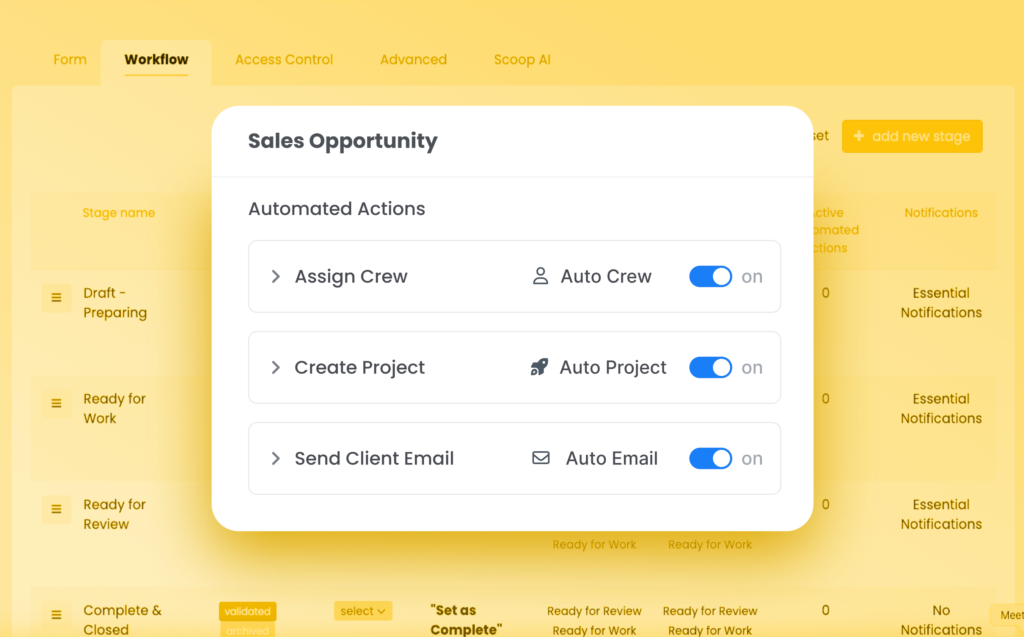
As your long-term operating partner, Scoop connects contract terms to dispatch, field documentation, change-order approvals, and billing handoffs so every milestone, SLA, and compliance artifact stays tied to what actually happens on site.
Built as solar software for execution, Scoop acts as a Central Operations Hub that carries EPC obligations, PPA commitments, and O&M service terms across install, service, and invoicing, without replacing your CLM, CRM, or ERP.
Frequently Asked Questions About Contract Management for Solar Companies
What Is the Most Common Type of Contract in Solar Energy?
It depends on the phase and market, but EPC contracts are widely used for utility-scale project delivery. PPAs govern energy offtake, and O&M contracts define post-commissioning service obligations.
How Do Solar Companies Track Contract Compliance?
Contract management for compliance relies on milestone-based tracking paired with documentation that proves performance. That typically includes automated alerts for key dates and a system that links field evidence to specific contractual obligations.
Can Contract Management Tools Integrate With Solar Operations Platforms?
Yes. Many companies use a dedicated CLM tool for legal workflows and connect it to operational systems through APIs, integrations, or shared data models so contract data supports scheduling, field capture, and billing.
How Does Contract Management Differ for Residential and Commercial Solar?
Residential agreements are often simpler and faster to execute, while commercial projects involve more parties and longer timelines. Commercial and utility-scale work typically adds complexity through EPC delivery terms, interconnection requirements, and long-term performance obligations.
What Role Does Contract Management Play in Solar O&M?
O&M contracts define response times, availability targets, and invoicing triggers, which makes contract management critical for performance and billing. Effective oversight connects monitoring and dispatch to documentation, compliance, and customer reporting.
How Long Do Solar Contracts Typically Last?
Contract duration varies by type, but PPAs and O&M agreements often span 10 to 25 years. EPC contracts are project-based and typically run from procurement through commissioning, while subcontractor agreements are scoped to specific tasks or phases.
What Are Common Mistakes in Solar Contract Management?
The most frequent mistakes are treating contract management as a one-time filing exercise and relying on scattered tools for tracking. When milestones, change orders, and compliance obligations are not centralized, small oversights compound into financial exposure and delayed project delivery.
How Do Change Orders Affect Solar Project Contracts?
Change orders modify the original scope, cost, or timeline of a contract and can erode margins if they are not documented and approved consistently. Strong contract management captures every change against the original agreement so that accountability and billing remain accurate.