Field service budgeting is the process of forecasting and controlling the labor, travel, parts, and overhead required to deliver field work profitably, and Scoop helps teams connect those costs to day-to-day execution. A strong budget uses actual job data, capacity forecasts, and contingency planning to identify overruns before they erode margins.
Key Takeaways
- A complete field service budget should account for 4 core cost categories: labor, travel, parts, and administrative overhead.
- A single truck roll can cost $150 to $300, and total costs can exceed $1,000 when lost productivity and vehicle overhead are included.
- A failed first visit can generate roughly 2.5 additional visits, multiplying the labor, travel, and capacity cost of one unresolved job.
- Build your baseline using at least 12 months of actual cost data, with cost per work order as a core planning metric.
- Field service budgeting can be built around 3 steps: establish actual costs, forecast demand against crew capacity, and reserve for reactive work.
- A contingency reserve of roughly 10% to 15% of the maintenance budget can help absorb unplanned reactive work.
Field service budgeting tends to break down in the field, where a rescheduled crew, a second trip to the same site, or an invoice stuck for weeks erodes margin before anyone reconciles the numbers, and field service budgeting turns into guesswork once active jobs, service work, and their true cost sit in disconnected tools.
This guide breaks down which costs belong in a field service budget, the hidden ones that erode it, and a step-by-step method you need to build one your operations can actually hold to. It also looks at why growing companies control spend less through a single all-in-one software system and more by connecting the best-in-class tools they already use, so execution and billing stay in sync.
What Field Service Budgeting Is and Why It Matters
Field service budgeting is an operational discipline before it’s a financial one. Every scheduling, dispatch, and invoicing decision moves a number in the plan, so it mirrors how your team manages crews, active jobs, and service work across installation, maintenance, and repair. That makes field service budgeting inseparable from day-to-day operations: the expenses you forecast are the direct output of how work gets assigned, completed, and invoiced. Companies that manage it purely as a finance exercise lose the chance to run it as an operating tool.
When that link is weak, the damage shows up as consequences the business already tracks: billing delays that stretch cash flow, response times that slip past customer support commitments, and steady margin erosion across otherwise profitable jobs. Equipment failures and reactive callouts compound the problem, because unplanned downtime carries costs far beyond the repair itself for the company absorbing it, which is why industry benchmarks treat reliability as a financial line and not a maintenance one.
Revenue that looks earned on paper stays uncollected while field documentation catches up, so the money gap between completed work and paid invoice becomes a budgeting problem long before it becomes an accounting one. Controlling those consequences starts with knowing exactly what field service budgeting has to absorb.
Which Costs Belong in a Field Service Budget?
A complete field service budget accounts for 4 key cost lines: labor, travel, parts, and administrative overhead. Most teams size the labor line carefully and then underestimate the ones beneath it, which is where scheduling inefficiency, wasted expenses, and idle resources accumulate. Getting the split right makes the difference between field service budgeting that holds and a number you rewrite every quarter.
Labor and Overtime Costs
Labor absorbs the largest share of field service spend, covering wages, benefits, payroll taxes, and the overtime that appears whenever a schedule slips. The number that matters is not the hourly rate but the share of paid time that converts into billable work, because travel between sites, waiting on parts, and rewriting paperwork all draw from the same labor pool. Weak scheduling is what turns ordinary hours into overtime: when a team gets dispatched without a realistic route or a workable time budget for the job, the shift runs long and the premium rate applies. Accurate time tracking at the job level is the only way to see which work types consistently run past estimate, and that time tracking record is what your next labor forecast gets based on.
Travel, Fuel, and Vehicle Costs
Every dispatch decision spends money before a technician touches the job, which is why travel weighs heavier than most teams expect. Fuel, mileage, insurance, and vehicle wear accumulate on each trip, so a route that doubles back across the same territory doubles the cost of covering it. Tightening field service dispatch so the right technician reaches the right site at the right time is the key efficiency gain available in this category. Industry benchmarks put a single truck roll at $150 to $300 per visit, and the real figure climbs past $1,000 once lost productivity and vehicle overhead are counted.
Parts, Inventory, and Administrative Overhead
Next to labor and travel, parts and administrative overhead look minor, yet they hide the most recoverable waste in the budget. Overstocked shelves tie up cash in resources nobody has scheduled, emergency parts orders carry rush freight and premium pricing that no forecast accounts for, and inventory tracking normally lives in dedicated software rather than inside the service platform, so someone ends up reconciling stock against active jobs by hand using a spreadsheet. Administrative overhead follows the same process problem: manual dispatching, paper field documentation, and invoice preparation consume management hours that never appear on a customer invoice. These four categories cover what field service budgeting plans for, but the costs that break it rarely carry a line of their own.
What Hidden Costs Drain Field Service Budgets?
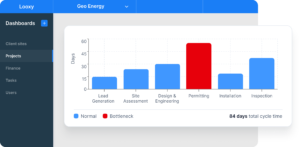
The costs that do the most damage to a field service budget rarely appear as a line item in it. They erode field service profitability from underneath instead: a customer visit repeated 3 times, revenue that sits uninvoiced for a month, and operations absorbing the money while the plan on paper still looks balanced. Every field service business carries some of these, and the companies that track them are the ones that keep them small.
Repeat Truck Rolls and Failed First Visits
A technician who arrives without the right part or the right information turns one job into several, which is one of the most expensive failure modes in field work. Industry benchmarks show a failed first visit generates about 2.5 additional visits to close the same ticket. Each of those return trips re-spends the full travel and labor cost of the original dispatch, so a single unresolved fault consumes the margin budgeted for 3 or 4 clean jobs. The efficiency loss compounds too, because every repeat visit occupies the capacity your team needs for new customer work.
Missed SLA Windows and Penalty Exposure
When response targets slip past the window a contract defines, the service level agreement stops being a performance metric and becomes a billing event. Penalty clauses reduce the invoice value of work already delivered, and the customer relationship absorbs damage that costs far more at renewal than the penalty itself. A support team that misses windows repeatedly also loses the pricing leverage to bid premium response tiers, so the business forfeits revenue it never counted as lost. Getting a technician on site at the right time is a budget control, not just a service standard.
Billing Delays That Stretch Cash Flow
Close the gap between the moment a job is completed and the moment the invoice goes out, because that interval is where healthy revenue turns into a cash flow problem. Field documentation stuck on paper, in a truck, or in separate software holds up invoicing for weeks, and finance cannot bill what it cannot verify, so money drifts further from the period that carried the cost of earning it and distorts the financial picture the forecast was built on. Late billing is a field service budgeting failure before it is an accounting one, so the invoicing process deserves the same scrutiny as the scheduling process. Knowing where field service budgeting leaks is what makes the next step possible: building one that plans for it.
How to Build a Field Service Budget Step by Step
Field service budgeting is a 3-step management process based on what your operation actually spends, not on last year’s number with a percentage added: establish a baseline, project demand against crew resources, then reserve for the work management cannot schedule.
Baseline Costs From Field Documentation and Asset Data
Pull 12 months of actual costs from field documentation and asset data before projecting a single new number forward, using the same labor, travel, parts, and administrative overhead split. Make cost per work order the core unit, because it normalizes across job types and gives you a number every forecast can be based on, alongside the other field service metrics to track as the period runs. A baseline is only as reliable as the tracking behind it, so historical accuracy depends on time tracking and field updates landing in one system rather than being reconstructed from memory at year end.
Forecast Service Demand and Crew Capacity
Project next period’s active jobs, service contracts, and preventive maintenance cycles into the crew hours required to deliver them. Map that demand against the team you actually have, including the allowances every company needs for training, leave, and turnover, then mark every month where the work exceeds available resources. Those gaps are where scheduling breaks down and the budget absorbs overtime or subcontractor rates, so pricing them now is far better than discovering them mid-quarter. Capacity software helps here, but only if the demand numbers going into it are real.
Set a Contingency Reserve for Reactive Work
When equipment fails without warning, the cost draws against the contingency reserve or against the quarter’s margin. Best practice allocates 10 to 15% of the maintenance budget to contingency rather than rolling prior-year spend forward as a baseline. Sizing it right means weighing preventive maintenance spend against the reactive expenses it avoids, because more preventive work shrinks the reserve you need while a deferred backlog of new failures enlarges it, and that financial trade-off is the key decision this step encodes. Each of these steps assumes the underlying numbers are trustworthy, which depends less on the field service budgeting method than on whether the systems behind it are connected.
How a Central Operations Hub Strengthens Field Service Budgeting
Field service teams rarely run on one system. Monitoring or intake sits in one place, service execution in another, and billing in a third, so field service budgeting breaks in the handoffs between them, where a completed job waits for someone to retype it into an invoice. Unlike general business software that assumes the work happens at a desk, a Central Operations Hub connects those 3 systems, so execution data moves from the field into invoicing without manual reconciliation. An all-in-one platform can be a sensible fit for smaller or simpler operations, but as service volume and complexity grow it tends to introduce rigidity that is costly to unwind later. Growing companies keep the best-in-class tools they already use and connect them, which keeps SLA tracking, scheduling, and invoicing consistent as volume increases.
Scoop acts as that Central Operations Hub for field service teams. Rather than replacing your field service management software, Scoop connects the stack around it, keeping field documentation and asset data in one operational layer so crews, dispatchers, and finance work from the same record. That includes integrating with the inventory tracking tools your team already uses, so parts activity stays connected to the jobs that consume it. That shortens the path from completed job to sent invoice, and gives managers real-time visibility into job status and field progress while the period is still open, which is when the plan can still be corrected. Real-time visibility at that stage is what helps a manager fix an overrun instead of explaining it later.
Build a More Predictable Field Service Budget With Scoop
Labor overruns, repeat truck rolls, and invoices that sit for weeks all trace back to the same gap between what happens in the field and what your systems can see. Scoop closes that gap as the Central Operations Hub that connects service work to billing, giving your operations real-time visibility and the efficiency to support better cost control. See how it can help your team control field service costs, then book a demo.
Frequently Asked Questions About Field Service Budgeting
How Much Should Field Service Teams Budget for Operations?
No universal percentage applies. The split between labor, travel, parts, and administrative overhead shifts with your trade, job mix, and the size of your company, so use the cost categories above as a starting structure rather than a formula. Set your own ratios using 12 months of actual cost data, since your historical cost per work order is a more reliable planning input than any industry benchmark.
What Is the Biggest Hidden Cost in Field Service Budgets?
Failed first visits. A single unresolved job multiplies into repeat truck rolls that re-spend travel and labor already paid for once. The knock-on effects usually cost more than the trips themselves: missed SLA windows create penalty exposure on support contracts, and delayed field documentation pushes invoicing weeks past job completion.
Can Software Reduce Field Service Budget Overruns?
Yes, mainly by tightening the 3 areas where field service budgeting slips: scheduling, dispatch, and invoicing. Management software that keeps field updates in one place helps by giving you real-time cost visibility while the period is still open, so overruns get corrected instead of discovered after the quarter closes. When you compare field service management software pricing, weigh the subscription against the implementation and ongoing configuration cost of keeping the platform aligned with how your operation changes.
How Do You Budget for Reactive Versus Preventive Work?
Fund a preventive maintenance program as a planned line, then hold a separate contingency reserve for the reactive breakdowns you cannot schedule. The two move against each other, so broader preventive coverage should shrink the reserve you need over time. Project both from your own failure history and asset data rather than carrying last year’s numbers forward.
How Can Teams Get Best-in-Class Features in One Field Service Platform?
An all-in-one platform can be a sensible fit for smaller or simpler operations. As service volume and complexity grow, though, few software companies stay best-in-class at monitoring, service execution, and billing at once, and consolidating on one suite tends to introduce rigidity that is costly to unwind later. The more durable approach is to choose the best software for each function and connect it through a Central Operations Hub, which keeps the stack modular. You can then adopt a better tool or drop one you have outgrown without replatforming the whole operation.