How to choose a solar CRM in 2026 comes down to picking software that fits your solar sales, proposal, and installation workflows rather than a generic sales tool. Solar companies struggle with scattered leads, slow quotes, and poor handoffs after contracts, which is exactly what this guide helps you avoid.
What Are the Challenges of Choosing a Solar CRM?
Choosing a CRM for a solar company becomes challenging because traditional customer relationship management software focuses on managing early sales activities like lead tracking, quotas, and marketing automation rather than supporting the full solar project lifecycle.
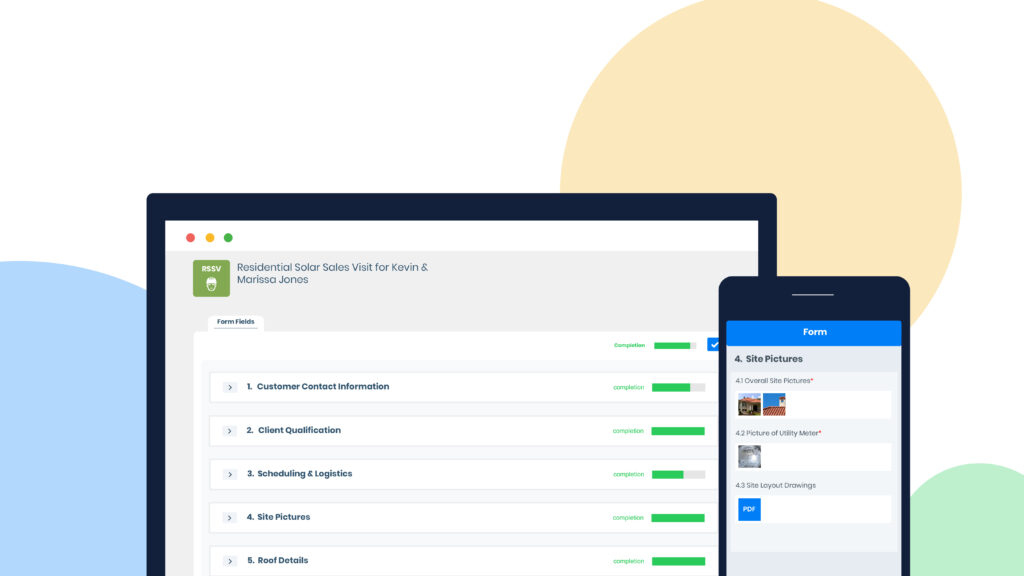
Once a solar opportunity moves beyond the sales stage, solar sales and operations teams must collect site data, photos, and technical details either on location or remotely, which most generic CRMs cannot capture or structure effectively. This limitation creates friction because the CRM often lacks a seamless mobile experience that allows field teams to continue their workflow without duplicating data or relying on manual processes.
As a result, critical information gathered during site visits rarely flows automatically into downstream phases such as system design, engineering, permitting, installation, commissioning also known as job closeout (JCO), and ongoing service.
This disconnect forces teams to spend time searching for documents and context instead of executing work, which increases operational overhead.
Why Do Solar Teams Need a CRM Built for Field and Office Work?
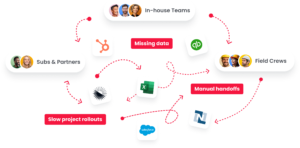
Solar teams need a CRM built for field and office work because solar operations depend on continuous coordination between on site crews and office based roles throughout the full project lifecycle. A centralized solar operations management system connects field data, project tasks, and customer records in one workflow, which reduces manual handoffs and limits delays caused by duplicate or late data entry.
Also, solar installation and service businesses involve site assessments, design validation, permitting, installation, and ongoing service, which creates interdependent tasks that span multiple roles and locations. The problem with traditional CRM platforms is that they prioritize office workflows like lead tracking and pipeline management, which leaves field teams without structured tools for capturing photos, site notes, or real time updates.
A solar CRM with integrated project management like Scoop connects technicians in the field, operations staff in the office, and sales teams in active deals within a single operational view. This shared system supports in context communication, task ownership, and status visibility across teams, which allows solar companies to run consistent workflows from initial sale through installation and long term service.
Why Solar Companies Need a Centralized CRM?
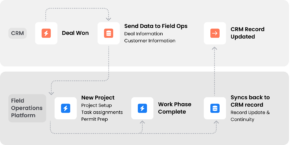
A connected solar CRM centralizes project data and links sales, project management, and field operations into one continuous workflow, which restores efficiency lost when teams force generic CRMs to handle end-to-end solar delivery.
A typical solar installation starts with a site assessment conducted in person or remotely, which generates customer details, documents, and photos that must be captured once and reused across every downstream step. When this data moves cleanly from sales to project managers and then to designers, engineers, and installation crews, each team works from the same real-time record instead of re-entering or re-explaining information.
Without a single system coordinating these handoffs, manual data entry and fragmented communication slow execution and increase the risk of missing or outdated information across phases. This fragmentation continues when customer and site data must be re-entered from a CRM into separate design or proposal tools, which delays quoting and creates avoidable duplication.
A Single Source for Data, Documents, and Project Status
A fragmented CRM environment forces solar teams to spend time searching for documents, sending emails, logging calls, maintaining checklists, and requesting status updates from field crews, which slows execution across active projects.
Scoop provides a proprietary CRM built specifically for solar operations and automation management, which centralizes data, documents, and project status in one system to remove these operational delays.
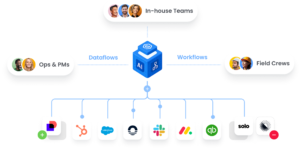
Plus, Scoop’s cloud-based CRM with integrated project management enables solar businesses to streamline workflows, improve collaboration, reduce administrative overhead, and support growth across EPC, installation, and service operations. The GLOO Integration Platform establishes a real-time, bi-directional connection between sales-focused CRMs used for lead management and Scoop, allowing teams to manage the full solar project lifecycle from contract through installation and ongoing service within a single operational system.
Ready to Choose a Solar CRM That Fits How Your Team Actually Works?
Choosing the right solar CRM in 2026 means aligning your software with how your sales, operations, and field teams already deliver projects from first contact through long term service. If your current tools create friction between sales, site assessments, design, installation, and service, it may be time to evaluate a platform built specifically for solar workflows.
Exploring a solar operations CRM like Scoop can help you centralize data, reduce handoffs, and support consistent execution across every stage of the project lifecycle.