
FAQ About Scoop's Products & Features
Questions? We've got you covered. Below are some frequently asked questions to provide you with more information about Scoop and our suite of products.
Categories
Product & Fit
Scoop is a Central Operations Hub (COH) that connects your systems, teams, and workflows so work moves forward automatically. It standardizes how sales, projects, service, and operations execute—reducing manual handoffs, improving visibility, and making outcomes predictable.
A Central Operations Hub gives you a stable execution layer that connects your tools, teams, and workflows as your business grows. Instead of forcing you into a rigid all-in-one platform or stitching together disconnected point solutions, Scoop keeps your core operations consistent while your tech stack evolves around it.
A COH enables you to:
- Keep scheduling, field execution, workflows, and reporting in a single system of record
- Connect best-of-breed tools without rebuilding processes or re-platforming later
- Avoid lock-in and operational debt created by so-called all-in-ones
- Give teams and leadership real-time visibility across jobs and stages
- Future-proof operations as volume, services, and complexity increase
Scoop is optimal for service, installation & construction companies with multiple teams touching the customer lifecycle—especially when growth has made execution harder to manage.
Scoop is a strong fit if you:
- Run high-volume and/or complex, multi-step workflows (sales → design → permitting → install → service/maintenance → billing)
- Have handoffs between roles that create delays, dropped balls, or rework
- Use a mix of tools (CRM, design/proposal, spreadsheets, scheduling, accounting, inventory tools) and need them to all work together seamlessly
- Collaborate with and manage a network of subcontractors, dealers or franchisees
- Want more predictability and control over growth without adding layers of admin
Most customers come to Scoop when they’re beyond “small and simple,” and need a practical way to standardize operations, improve visibility, and scale delivery.
Usually, no—Scoop isn’t trying to be another CRM or an ERP or replace specialized design or proposal tools. Instead, Scoop emphasizes the missing operational layer that connects all your systems and teams. Many customers keep their CRM and ERP and use Scoop to orchestrate processes, improve data quality, reduce manual and missed handoffs, and make execution user-friendly and predictable. If you’re missing a CRM or your current one is lightweight, Scoop can support parts of that workflow—but the typical outcome is: keep what works, replace and integrate what doesn’t, and run operations more smoothly end-to-end.
- Implementation Team Formation: assisting you in identifying an internal task force with the right skillsets to manage, execute and champion the implementation alongside your Scoop Success Team.
- Leadership Team Training & Practice Runs: multiple sessions with your various team leads to provide training and work collaboratively on customizing best practice templates to your needs.
- Frontline Team Training & Go-Live Support: training each of your dedicated teams from site surveys to design & engineering, permitting, field execution and service O&M to maximize their success.
On average, onboarding takes about 8-10 weeks but can be accelerated based on the availability of customer resources and information. To ensure onboarding success, we require a minimum level of availability and commitment from the customer executive and operations team.
Scoop differentiates by focusing on execution, not just tracking.
Most tools either (a) store customer data (CRMs), (b) handle back-office transactions (ERPs), or (c) manage a narrow or specialized slice of work (e.g., design, accounting). Scoop connects all those systems and turns your workflows into a repeatable, team-wide operating system—so deals, projects, service work, and handoffs move forward consistently without relying on heroics.
That means teams choose Scoop when they need to:
- Standardize how work gets done across roles and branches
- Reduce manual handoffs and rework with clear steps, ownership, and visibility
- Integrate with existing tools instead of replacing everything
Improve outcomes (speed, margin, customer experience) by tightening execution, not adding more admin work
Implementation & Success
Onboarding is guided, structured and fully supported by a dedicated success team assigned to you. We start by mapping your current workflows, data sources, and must-have outcomes, then configure Scoop to match how your team actually works.
Next we connect the tools you already use, migrate or import the right data, and train your team by role (ops, sales, finance, field, subs etc.). Most teams go live in phases—so you get early wins fast, then expand from there.
Pricing
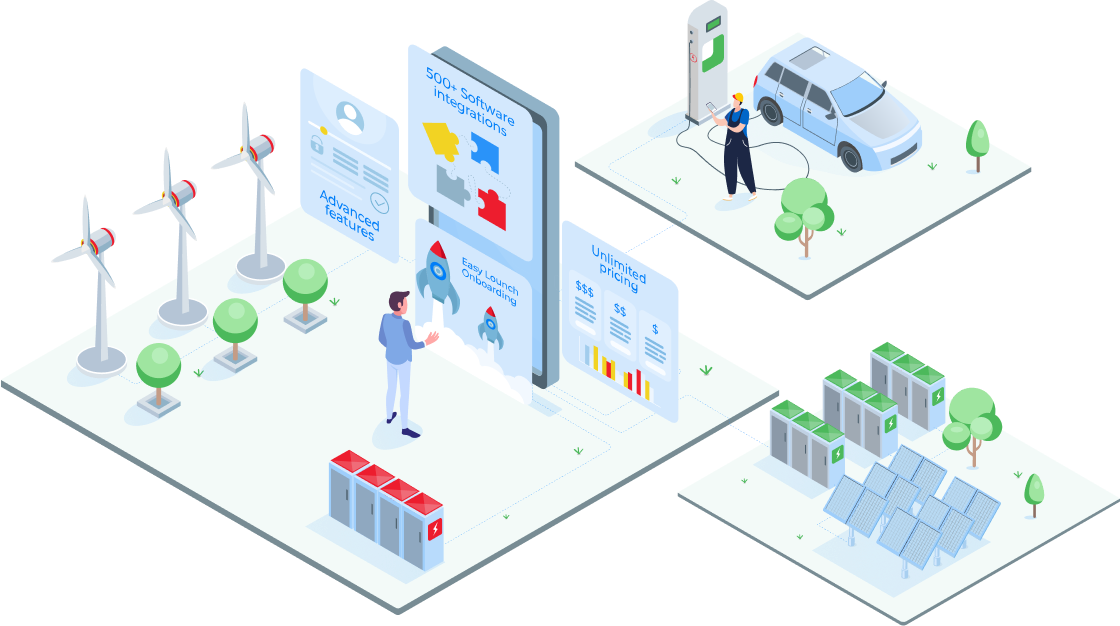
Scoop pricing is designed to scale with the size and complexity of your operation while being tied to actual value in your business. Customers pay a predictable subscription based on the modules and workflows they need and the volume of installations or service they want to run through Scoop. We’ll work with you to map out your requirements and recommend the “right-sized” plan so you’re not overbuying—and so you can see clear ROI before expanding. All Scoop plans come with unlimited users which when combined with granular access controls make it easy to extend the platform to all in-house, partner and subcontractor teams.
Integrations & Tech Stack
Yes. Scoop integrates with hundreds of tools across CRM, accounting, design, scheduling, and other operational systems. Integrations are a core part of the platform not an after-thought. In fact, given the Central Operations Hub role that Scoop plays, we developed a dedicated platform dubbed “GLOO”. This allows us to deliver turnkey, highly customizable yet cost-effective integrations to customers.
No. Scoop is designed to work with your existing tech stack. Customers typically keep their current systems and use Scoop to connect them into one cohesive operating model.
Scoop does not aim to replace specialized inventory or materials management tools. Instead, it integrates those systems into the Central Operations Hub, ensuring inventory and procurement data flows smoothly into sales, projects, and field execution—without manual coordination or duplicate data entry.
Field & Execution
Yes. Scoop includes a native mobile app designed for field execution, allowing teams to capture site data, photos, checklists, and updates directly from the field.
Yes. Field teams can continue working offline, and data automatically syncs once connectivity is restored—so execution doesn’t stop when signal drops.
Still Have Questions?
If you’re evaluating Scoop or want to understand how it fits into your operation, book a demo and we’ll walk through your workflows and tech stack together.