Solar projects stall after permitting because permitting, scheduling, materials, and field execution are managed across disconnected teams and tools, forcing manual handoffs after approval. Scoop addresses this with a Central Operations Hub that connects the permit milestone directly to scheduling, dispatch, field execution, and closeout.
In this guide, we will walk through the 5 most common places projects stall after permitting, and 3 ways those roadblocks can affect your solar operations in general. We will also share how top solar companies are mitigating these risks by improving project execution.
Key Takeaways
- 10 to 20% of permitted residential solar projects still never reach installation.
- The physical solar installation may take only 1 to 3 days, while the broader permit to PTO process can span 4 to 12 weeks.
- Utility interconnection can add roughly 20 days to the post permit timeline, depending on the utility and project requirements.
- A single missed handoff can push an approved project back by days or weeks when scheduling, materials, and field teams operate in separate systems.
- Connecting 4 key stages, permitting, scheduling, field execution, and closeout, helps teams reduce manual reconciliation after approval.
Solar projects stall after permitting far more often than teams expect, not because the permit is the problem, but because the handoff from permitting to installation breaks down. Permit approval should be the starting gun for execution, yet projects can lose weeks between approval and crew mobilization as the installer reconciles planning, project data, and next steps across disconnected systems.
The smoothest operations connect their permitting, scheduling, and field tools through a common execution layer instead of chasing another all in one system. That connection helps turn approval into action rather than another source of solar project delays.
What Happens After a Solar Permit Is Approved?
Once a permit is approved, the project moves from design and regulatory review into a new operational process. Teams need to confirm the approved design and site requirements, verify material readiness, schedule the installation crew, complete the installation, coordinate inspection, manage utility interconnection and permission to operate, then complete closeout and billing.
The physical installation itself may take only 1 to 3 days. The surrounding permit-to-install timeline can take weeks because each stage depends on the previous one being completed, communicated, and handed to the right person.
This distinction matters. The project usually does not stall because a single installation task takes too long. It stalls in the gaps between teams, tools, approvals, and dependencies. Understanding those gaps is the first step toward reducing solar installation delays.
The Permit-to-Install Handoff Is Where Projects Stall
Why do solar projects stall after permitting even after the most obvious regulatory hurdle has been cleared? In many organizations, design and permitting work in one set of tools while installation and field operations work in another.
When the permit clears, the next stage may depend on someone checking an inbox, updating a spreadsheet, notifying an operations manager, confirming equipment, and manually creating or updating a work order. Each additional manual step creates another opportunity for the project to sit idle.
That makes the solar project handoff an operational problem rather than simply a paperwork problem. The permit may be complete, but the execution system has not automatically absorbed that milestone and moved the work forward.
A common execution layer can carry the permitting milestone directly into solar install scheduling and dispatch. Instead of requiring teams to reconcile separate systems every time a project changes status, the process can move forward based on the information already captured during design and permitting.
What Are the Most Common Causes of Post-Permit Stalls?
Post permit stalls rarely come from a single issue. Broken handoffs, scheduling constraints, equipment requirements, external dependencies, and disconnected systems can compound until a small delay becomes weeks of schedule and cash flow slippage.
Broken Handoffs Between Office and Field Teams
Permit approval does not help the field team if no one knows who owns the next step. When approval fails to trigger a clear assignment, an approved project can wait in an inbox while operations assumes scheduling has started and the installer assumes more information is coming.
The problem becomes worse when site details, the latest design, customer requirements, photos, or installation instructions are scattered across different systems. Field teams may arrive without the information they need, creating additional calls, review work, or repeat visits.
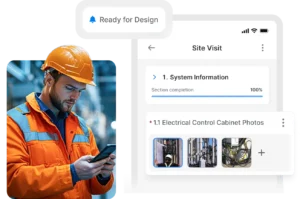
A field mobile app can help office and field teams work from the same site information, checklists, documents, and project updates. That gives the next owner the context needed to take action without rebuilding the project history manually.
Manual Scheduling and Crew Capacity Bottlenecks
Permit approvals do not arrive according to crew availability. They may clear in waves, creating a sudden queue of jobs that are technically ready but still need to be fitted into the schedule.
If solar install scheduling is handled manually, operations teams may spend significant time comparing project readiness, crew assignments, workload, and installation windows. Approved projects can queue behind one another even when there is usable capacity elsewhere in the operation.
This is where field service management software can connect work orders, crews, schedules, assignments, job status, and field progress to actual project readiness. Better visibility helps teams understand which jobs are genuinely ready to take the next available slot instead of getting stuck in a planning backlog.
For growing installers, recovering even small amounts of lost capacity can matter because unused crew time cannot be reclaimed later.
Equipment and Material Readiness Gaps
An approved and scheduled project still cannot proceed if panels, inverters, racking, storage equipment, or other required materials are not ready for the site.
The operational issue is often visibility rather than inventory management itself. Procurement may know that equipment is delayed, while scheduling still sees the project as ready. Or materials may have arrived without the project status being updated.
A connected execution process does not require replacing existing procurement or inventory tools. Instead, material readiness can be brought into the project workflow so teams can confirm the necessary resources and requirements before committing crew capacity.
That helps avoid sending teams to jobs that cannot be completed and reduces the risk of rescheduling work because one required component was missing.
Utility Interconnection and Inspection Dependencies
Some post permit steps are controlled internally. Inspection schedules and utility interconnection are not.
Solar permitting and interconnection delays therefore need to be managed differently from office handoffs or crew scheduling. Teams cannot control every utility or local inspection timeline, but they can sequence those dependencies early, track their status, and make sure required information is submitted as soon as the project is ready.
Interconnection may take roughly 20 days, while PTO timing can vary by utility, state, system type, and local requirements. A project that finishes construction without the right inspection or grid interconnection process already moving can stall at the finish line before it begins producing power.
This is also why utility scale queue analysis should not be confused with the operational problem facing residential and commercial installers. Federal policy, environmental review, transmission planning, wind development, and broader clean energy market issues may influence the industry, but the controllable challenge here is keeping each installation moving through its required inspection, interconnection, and approval steps.
Disconnected Tools and Scattered Project Data
Tool fragmentation ties many of the other causes together.
When permitting status lives in one system, crew planning in another, field work somewhere else, and billing requirements in a separate platform, no single team has a reliable view of project readiness.
People compensate with spreadsheets, email, messaging, and manual report updates. Those workarounds may function at lower volume, but they become increasingly difficult as the business grows.
Leaders then make decisions using stale information. Coordinators spend time getting status updates instead of moving projects forward. Field teams may see incomplete project context. Finance may not know that a milestone has been completed.
The result is not simply more administrative work. It is a slower process with less reliable data, weaker analysis, and a greater chance that important handoffs are missed.
How Do Post-Permit Stalls Hurt Solar Operations?
Post permit delays eventually show up in the operational metrics solar leaders are expected to improve. A project sitting idle for a few days can cascade into missed installation windows, lost capacity, rework, and delayed revenue over the following weeks or months.
Missed Install Windows and Slipping Timelines
Every idle day between permit approval and installation moves activation later.
That may mean a project takes longer to reach PTO, but the consequences can extend beyond one customer. Delayed jobs consume future schedule capacity, compress the number of projects crews can complete during high demand periods, and make it harder to meet customer commitments.
Depending on the project, installation delays may also increase pressure around incentive, tax credit, financing, or other deadline driven requirements.
Lost Crew Capacity and Rework
Crew capacity is perishable. If a team is available today but an approved project is not actually ready, that time cannot simply be recovered next month.
Poor handoffs can create a second cost through rework. Missing site information, incorrect requirements, outdated design details, or incomplete readiness checks may cause a crew to stop work or return to the site later.
Those problems reduce productivity and erode margin even when the underlying installation work is completed successfully.
Billing and Cash-Flow Delays
Stalls also affect finance.
If closeout documentation is incomplete, inspection status is unclear, or PTO requirements have not been completed, milestone billing and financing draws may be delayed. The operational process therefore affects when the business can report completion and collect payment.
That turns solar project delays into a cash flow issue, not simply a scheduling issue. The longer projects remain between milestones, the longer the company may need to carry labor, equipment, and other project costs before billing can move forward.
Connected Execution Keeps Solar Projects Moving After Permitting
Reducing post permit stalls does not require replacing every tool in the technology stack.
The execution differentiator is creating a connected process where the permitting milestone can flow directly into scheduling, dispatch, field execution, closeout, and billing without requiring someone to manually reconcile each system.
That means standardizing what should happen when approval arrives. The right owner receives the next task. Site and design information follows the project. Material readiness is visible before scheduling. Field completion advances the workflow. Inspection and interconnection requirements are tracked. Closeout information reaches the people responsible for billing.
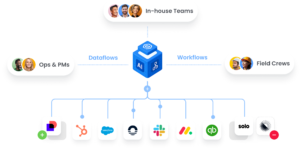
This is the Central Operations Hub, or COH, model. Rather than forcing a business into another all-in-one platform, Scoop’s COH connects the best in class tools teams already use and provides a common execution layer across them.
Scoop’s GLOO integration service can connect CRM, design, scheduling, inventory, and accounting tools so important data and milestones move between systems without repeated manual entry.
At the same time, LOOXY reporting & analytics gives operations leaders trusted, real time project status for reporting and analysis. Instead of getting updates by chasing individual teams, leaders can understand where projects are moving, where they are stalled, and which parts of the process need attention.
For an industry managing growing project volume, new technologies, storage, evolving market requirements, and limited operational resources, that modular approach can provide a cleaner path to scale while allowing teams to keep the specialized systems that work well.
Keep Solar Projects Moving After Permitting With Scoop
At Scoop, we provide a Central Operations Hub that connects the permitting milestone to install scheduling, dispatch, field execution, and closeout through one execution layer.
Rather than asking you to replace the systems your teams already rely on, Scoop connects the work across them so a completed permit can trigger the next step without manual reconciliation. That helps your team reduce missed install windows, recover crew capacity, reach PTO faster, and create cleaner milestone billing.
Our software for solar teams is built to keep project data, teams, partners, and best in class tools aligned as work moves from one milestone to another.
If you need a more connected process between permit approval and installation, book a demo with Scoop’s team today.
Frequently Asked Questions About Solar Project Delays
How Long Does a Solar Project Take From Permit to Activation?
The physical installation may take only 1 to 3 days, but the permit to install timeline through PTO commonly runs approximately 4 to 12 weeks. Interconnection may account for roughly 20 days, although timing varies by utility and project requirements.
Teams can compress the controllable parts of that process by beginning interconnection activities in parallel where possible, staging materials before the installation date, and connecting approval directly to scheduling instead of waiting for manual handoffs. Even when external steps take longer, better coordination can prevent additional operational delays from being added between them.
What Percentage of Solar Projects Stall or Cancel After Permitting?
Approximately 10 to 20% of permitted residential solar projects still do not reach installation. Some jurisdictions report that roughly 1 in 5 projects may be cancelled after the permit application.
The specific rate can vary by market, state, installer, and local conditions. The important operational takeaway is that approval alone does not guarantee project completion. Teams still need a reliable process for moving approved work into scheduling, installation, inspection, interconnection, and PTO.
Is Permitting or Interconnection the Bigger Cause of Delays?
It depends on which part of the timeline is being measured.
Automated permit review can take less than a day in supported jurisdictions, which means the largest controllable source of delay may occur after approval through handoffs, scheduling, material readiness, and field coordination.
Utility interconnection remains an external dependency and can still extend the timeline. Solar teams therefore need to sequence interconnection early, understand grid and utility requirements, and track approval status without allowing internal operational delays to compound the wait.
How Can Solar Teams Reduce Post-Permit Delays Without Adding Headcount?
Teams can reduce post permit delays by standardizing the solar project handoff, automatically triggering scheduling when approval is received, and connecting existing tools through a common execution layer.
The objective is to remove unnecessary coordination work. Instead of asking people to rekey data, check multiple systems, and manually tell the next person that a project is ready, the process itself can move the work forward. That helps existing teams use their capacity more effectively and avoid adding headcount simply to manage growing coordination requirements.
How Can I Get Best-in-Class Tools Without an All-in-One Platform?
A best in class approach lets teams choose specialized systems for CRM, design, finance, inventory, scheduling, and other functions instead of accepting the limitations of a single all in one platform.
The challenge is making those tools operate as a connected system. A Central Operations Hub provides the common execution layer between them, allowing project data, milestones, and workflows to move across the stack.
Scoop provides that hub layer for energy and infrastructure teams. As the industry changes or a business adopts a new tool, teams can replace the component they have outgrown without needing to replatform the entire operation. That creates a more modular, adaptable, and future proof technology stack while keeping execution connected.