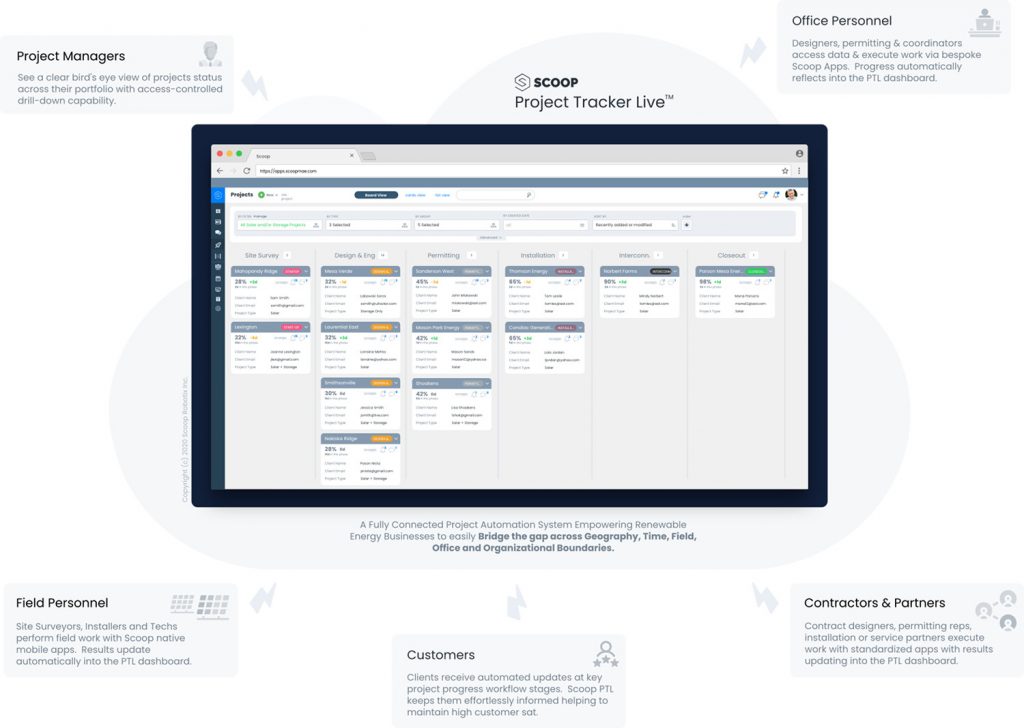
Knowing how to optimize data center construction starts with recognizing that many factors are making every week of schedule slip expensive. Surging AI driven demand is colliding with rising costs, a severe skilled labor shortage, and power and permitting bottlenecks. The following seven step framework gives general contractors, EPCs, MEP contractors, project managers, and owners a repeatable way to compress timelines, improve efficiency, and protect the project budget. Today, the most optimized builds connect their planning, design, and field tools instead of chasing a single all in one platform.
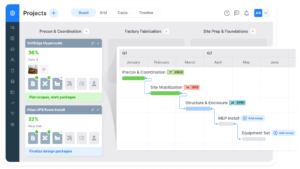
1. Map the Data Center Construction Lifecycle and Lock In Milestones
Data center construction optimization begins with a clear view of the entire lifecycle: planning, permitting, design, procurement, construction, commissioning, and closeout.
Before breaking ground, create a milestone-based master schedule that defines the owner, requirements, dependencies, and completion criteria for each major gate. Everyone involved in the data center construction process should understand what “done” means before work can move into the next phase.
Construction alone often takes approximately 18 to 30 months, while the full lifecycle, including planning, permitting, and utility coordination, can take three to six years. The timeline depends on the facility’s capacity, location, power requirements, equipment availability, and approval process.
A strong master schedule should include:
- Site control and feasibility approval
- Utility interconnection milestones
- Zoning and permitting decisions
- Design release dates
- Long lead equipment commitments
- Site mobilization and construction phases
- Systems testing and commissioning
- Operational turnover and closeout
A connected construction project management software can provide the operational layer for tracking milestones, assigning ownership, documenting completion, and keeping critical dependencies visible throughout the project.
2. Optimize Site Selection and Speed-to-Power Planning
Speed to power increasingly influences site selection more than land cost. A lower-cost property offers limited value when the required energy capacity cannot be delivered for several years.
Evaluate grid capacity, utility interconnection timelines, water availability for cooling, zoning requirements, environmental impact, and community support in parallel rather than sequentially. Power procurement, permitting, and community engagement must begin early because each can become a critical path constraint.
In some North American markets, power delivery timelines now range from two or three years to as long as eight or ten years. This makes access to practical, deliverable power capacity a core planning requirement rather than a late stage utility task.
Permitting and approvals alone can consume six to 18 months. Teams should engage utilities, authorities having jurisdiction, environmental consultants, and community stakeholders during initial site evaluation. Waiting until the site is fully selected to begin those conversations can add months to the data center construction timeline.
Running these workstreams concurrently helps teams identify unworkable locations earlier, reduce approval risk, and make site decisions based on the true path to operational capacity.
3. Front-Load Design Coordination With BIM
Building Information Modeling helps teams identify design conflicts before they become expensive field problems.
Model mechanical, electrical, and plumbing systems together so design teams can run clash detection across electrical distribution, cooling systems, structural elements, fire protection, and equipment layouts. Rack placement, cabling routes, equipment clearances, and maintenance access should also be tested digitally before construction begins.
Four dimensional BIM adds time and sequencing data to the model. Project teams can use it to visualize how systems will be installed, identify access conflicts, and ensure that one trade’s work does not block another.
This coordination is especially critical in data center facilities, where dense equipment configurations and strict redundancy requirements leave little room for improvisation. A routing conflict involving busways, piping, or cooling equipment can impact multiple contractors and create extensive rework.
Front loading design also helps lock in energy efficiency and cooling performance while changes are still relatively inexpensive. Teams can compare cooling architectures, electrical configurations, modular assemblies, and equipment access requirements before procurement and field installation make those decisions difficult to reverse.
4. Secure Long-Lead Equipment and De-Risk the Supply Chain
Transformers, switchgear, generators, chillers, cooling equipment, and high density computing equipment can dominate the critical path. Lead times for some packages can extend six to 12 months or longer, depending on specifications, manufacturing capacity, and market demand.
Identify long lead equipment during early design and connect every procurement milestone to the data center build schedule. Teams need visibility into submittal approval, manufacturing, factory testing, shipping, delivery, storage, and installation readiness.
To reduce supply chain risk:
- Release critical equipment packages early
- Qualify backup suppliers where practical
- Standardize equipment requirements across repeat builds
- Track supplier commitments against construction milestones
- Plan factory acceptance testing in advance
- Stage deliveries to match the installation sequence
- Protect equipment during temporary storage
Procurement data must remain connected to project planning. Without that connection, a schedule can appear healthy while crews are approaching a phase that cannot begin because required equipment has not arrived.
5. Build With Modular and Prefabricated Methods
Modular data center construction moves repeatable work into controlled manufacturing environments where assemblies can be completed while site development continues.
Power skids, cooling assemblies, electrical rooms, utility modules, and white space modules can be fabricated off site, tested, delivered, and installed as coordinated packages. This allows site preparation and component manufacturing to happen at the same time rather than waiting for one phase to finish before the next begins.
Highly modular projects can reduce schedules by approximately 30 to 50 percent compared with conventional delivery methods when modular strategies are applied consistently.
To capture that benefit, teams must standardize repeatable assemblies, interfaces, documentation, and installation sequences. Treating every module as a custom task can remove much of the efficiency that modular delivery is intended to create.
Effective modular construction software can help teams coordinate fabrication, delivery, field installation, inspection, and approval workflows across multiple facilities and vendors.
Modular methods also reduce the number of field labor hours required for complex assemblies. Work performed in a controlled setting can deliver more predictable quality, improve safety, reduce weather exposure, and help teams use scarce skilled labor more efficiently.
6. Connect Field and Office Teams on One Execution Layer
An optimized project requires field and office teams to work from one connected system of record.
Schedules, assignments, job status, field progress, photos, checklists, approvals, and documentation must move through structured workflows. Otherwise, project managers spend time consolidating updates from email, spreadsheets, design tools, shared drives, and contractor messages before they can determine the actual build status.
A connected execution layer gives field teams clear task ownership and lets them submit structured updates from the job site. Office teams can see whether work has started, what has been completed, which requirements remain outstanding, and where an approval or issue is holding up progress.
Crew visibility should focus on schedules, assignments, job status, and documented field progress. It should not depend on GPS or employee location tracking.
Growing data center programs often require specialized solutions for BIM, project scheduling, procurement, accounting, and document control. Replacing each system with a rigid all-in-one platform can limit flexibility and create a new replatforming problem.
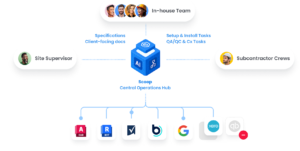
A Central Operations Hub connects those best in class tools through a common execution layer. Scoop’s field service management software supports structured field workflows, mobile updates, checklists, documentation, and approvals. Scoop’s GLOO integration service can connect CRM, design, scheduling, accounting, and other business systems based on available system access and integration requirements.
The result is a more reliable operational record, faster handoffs, and reporting that reflects actual project execution.
7. Streamline Commissioning and Project Closeout
Commissioning is the make or break transition from construction to operation. It verifies that the facility’s electrical, mechanical, cooling, control, and safety systems meet the owner’s performance and operational requirements.
Commissioning planning should begin during design, not after construction is substantially complete. Define the objectives, roles, testing levels, documentation standards, and acceptance criteria before equipment installation begins.
The commissioning plan should cover factory testing, site acceptance, component testing, functional performance testing, and integrated systems testing. Responsibilities must be clear across owners, general contractors, trade partners, equipment vendors, commissioning agents, and facility operations teams.
Digital closeout should centralize:
- As built drawings
- Equipment and system records
- Test results
- Inspection documentation
- Open and completed punch list items
- Warranties
- Operating procedures
- Training records
- Final approvals
Clean execution data helps the team verify requirements, resolve outstanding work, and hand the facility to operations without searching across disconnected folders and contractor systems. A structured closeout process supports faster turnover, more reliable future maintenance, and better long term facility performance.
Why Do Data Center Construction Projects Fall Behind Schedule?
Data center projects fall behind when structural constraints and disconnected execution practices compound across the schedule.
How Does the Skilled-Labor Shortage Stretch Build Timelines?
Labor scarcity changes the construction sequence, consumes schedule float, and increases cost.
Associated Builders and Contractors estimated that the United States construction industry needed to attract 439,000 net new workers in 2025 to balance labor supply with demand. In a 2025 AGC and NCCER survey, 92 percent of construction firms reported difficulty finding qualified workers, while 45 percent said labor shortages were delaying projects.
When the right trade is unavailable, dependent work cannot begin even if the site, materials, and equipment are ready. Contractors may need to resequence tasks, extend shifts, bring in more expensive labor, or delay milestones.
These challenges increase the need for prefabrication, standardized workflows, and productivity per labor hour. The goal is not simply to use fewer people. It is to reduce avoidable field work, repeat visits, incomplete documentation, and time spent waiting for instructions or approvals.
Supply Chain and Power Procurement Bottlenecks
Long lead equipment and grid interconnection are structural constraints, not isolated project risks.
A data hall cannot become operational without transformers, switchgear, backup generation, cooling capacity, and a dependable energy connection. When any of these elements slip, downstream construction and commissioning activities are affected.
Early procurement is only useful when it remains actively tracked. Teams must compare supplier status, approval dates, manufacturing milestones, delivery schedules, and installation readiness against the critical path.
The same principle applies to power procurement. Access to land without a deliverable interconnection plan does not create usable facility capacity.
What Happens When Field and Office Data Stay Disconnected?
When execution data is scattered across systems, status becomes unreliable, handoffs are missed, and rework grows.
Field teams may be building from outdated drawings while office teams rely on stale spreadsheets or manually prepared reports. A completed task may not trigger the next inspection, approval, equipment delivery, or subcontractor assignment.
On a mission critical facility, decisions made without current operational data can affect cost, performance, safety, and schedule. A connected digital execution process helps keep each team working from the same requirements and reduces the time project managers spend reconciling competing versions of progress.
Common Mistakes That Slow Down Data Center Construction
- Sequencing power procurement and permitting too late
- Freezing the design without complete MEP coordination
- Ordering long lead equipment after the critical path is already exposed
- Treating construction as a collection of custom tasks instead of standardized production
- Leaving field and office teams on disconnected tools
- Chasing a single all-in-one platform instead of connecting best in class tools through a common execution layer
- Skipping early commissioning planning
Optimize Data Center Construction Execution With Scoop
We built Scoop as a Central Operations Hub that connects planning, design, field teams, subcontractors, and your existing tools into one execution layer for data center builds.
Scoop is not a rip-and-replace all-in-one platform. It helps you preserve the specialized systems that support your business while creating structured workflows across project execution.
With Scoop’s data center operations software and field service management software, you can standardize field workflows, capture real time build progress, improve reporting reliability, and create cleaner commissioning and closeout records.
Book a demo to see how Scoop can support your data center construction operations.
Frequently Asked Questions About Data Center Construction
How Long Does It Take to Build a Data Center?
The construction phase usually takes approximately 18 to 30 months. The full process, including site planning, utility coordination, design, permitting, construction, and commissioning, can take three to six years. Early equipment procurement, parallel permitting and power planning, and modular methods can help compress the timeline.
How Much Does Data Center Construction Cost per Megawatt?
Shell, architectural fit out, mechanical and electrical infrastructure, contractor costs, contingency, and equipment are typically included in data center construction cost benchmarks. North American costs vary substantially by market, design density, redundancy level, power availability, labor conditions, and cooling requirements, while AI-ready facilities can cost considerably more than traditional cloud facilities because of their high density power and cooling requirements. Turner & Townsend reported that traditional data center construction costs increased by an average of 5.5 percent in 2025, while noting that consistent benchmark data for AI focused builds remained limited.
How Does Modular Construction Speed Up Data Center Delivery?
Modular construction allows teams to fabricate and test standardized systems off site while foundations, utilities, and other site work continue. This parallel process reduces field labor requirements, improves production consistency, and limits weather related disruption. Repeatable assemblies also make installation quality and duration more predictable.
What Software Helps Keep Data Center Construction on Schedule?
Project scheduling tools and BIM platforms support design coordination, sequencing, and master schedule management. Teams also need an operational execution layer that connects field updates, assignments, photos, checklists, approvals, and reporting. Scoop acts as a Central Operations Hub that orchestrates this stack rather than replacing every specialized system.
How Can Teams Get Best-in-Class Tools Without an All-in-One Platform?
Teams can select specialized systems for design, scheduling, procurement, accounting, and other critical requirements, then connect them through a common execution layer. This creates a modular, future ready technology stack where individual solutions can be replaced as requirements change without replatforming the entire operation. Scoop provides the hub layer that connects those systems and coordinates work across teams.