
Fixing handoffs between sales and install starts with creating a standardized process that connects the signed deal directly to operations, scheduling, and field execution. Scoop helps teams do this through its Central Operations Hub, connecting CRM, design, scheduling, and field workflows so project data and ownership move forward without manual handoffs.
This guide will share a 7-step process that your team can use across projects in order to reduce the friction and costs associated with missed or delayed handoffs between sales and install teams.
Key Takeaways
- A repeatable 7-step sales-to-install framework can reduce dropped handoffs, delays, and cancellations after a deal closes.
- 1 clear owner per stage helps prevent signed projects from sitting between sales, design, permitting, scheduling, and installation.
- A standardized handoff package should cover at least 6 core inputs: customer details, site information, financing status, photos, utility information, and signed documents.
- Connecting 3 core systems, CRM, design, and scheduling, reduces duplicate entry and keeps project data moving with the job.
- 1 shared execution layer gives field and office teams the same view of assignments, job status, field progress, photos, checklists, and approvals.
Handoffs between sales and install start by treating the transition from signed deal to scheduled job as a defined operational process. When customer information and deal data are scattered across CRM, design, and scheduling tools, teams lose time, details get dropped, and customers experience delays or cancellations just when their expectations are highest.
A repeatable seven step framework can protect margin and improve the customer experience by making ownership, information, and next steps clear from the start. The most reliable teams connect their existing tools through one execution layer rather than forcing every department into a single all in one platform.
1. Map Your Sales-to-Install Handoff and Assign Clear Ownership
The first step is to make the sales to install handoff an actual business process rather than an email, message, or call between two people.
Map every key point between a signed deal and a scheduled installation. For a solar company, that may include contract completion, financing approval, site survey, design, permitting, readiness review, and scheduling. Then set a clear owner for every stage.
Ownership should answer a simple question: who is responsible for moving the job to the next step?
It is also important to define the exact transition point between sales and operations. A sales to operations handoff can become ambiguous if sales considers the job complete when the contract is signed while operations considers it accepted only after financing, site information, and design inputs are available.
Both teams need to understand what “ready to install” means and what information must be present before the project reaches that point. This creates one shared definition instead of relying on internal assumptions about who should take action next.
2. Standardize What Sales Must Capture Before Every Handoff
Most dropped balls begin before the handoff itself. If sales closes a deal without collecting the right information, operations starts with an incomplete project.
Create a standardized solar deal handoff checklist that sales must complete before the deal can move forward. The package should include customer and site details, financing status, utility information, signed documents, site photos, and clearly documented expectations around the project timeline.
The goal is not to create administrative work for sales. It is to ensure operations receives the information it actually needs to deliver the product the customer was sold.
Customer expectations matter just as much as technical data. If a customer leaves the sales process believing installation will happen in two weeks while operations knows the realistic timeline is longer, the relationship begins with a gap that the install team must later repair.
A good handoff package gives operations the right information at the right time and establishes clear expectations before onboarding begins. That makes the close a stronger starting point for both the project and the customer experience.
3. Verify Site Conditions and Validate the Design Early
A signed contract does not automatically mean the job is buildable exactly as sold.
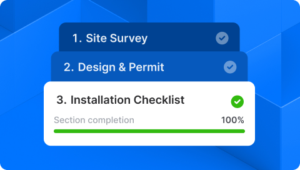
Teams should verify site conditions and reconcile the proposed design with field reality before the project enters final scheduling. That means confirming measurements and identifying roof, structural, electrical, access, or other site constraints that could change the work.
Accurate field data helps the design team make decisions using shared evidence instead of assumptions. Photos, checklists, notes, and measurements should become part of the same project record used by office teams.
A field mobile app for installers can help teams capture photos, checklists, and field updates directly on site so the information needed for design and installation is available without separate spreadsheets, text messages, or repeated calls.
This step is not another opportunity to sell the customer. It is a validation step designed to ensure the crew can build what was promised. Taking the time to make site and design data accurate early can prevent redesigns, change conversations, and installation day surprises later.
4. Automate the Handoff Trigger From Signed Deal to Operations
A manual handoff depends on someone remembering to make it happen.
When a sales rep closes a deal and then has to message operations, create a task, copy information, or manually request scheduling, there is an unnecessary delay between one completed stage and the next.
Instead, automate the trigger.
When a deal reaches the correct status in the CRM and the required handoff package is complete, operations should be notified and the project should automatically enter the next workflow. That might start a site survey, design review, permitting task, or solar installation scheduling process depending on the company.
Connecting the trigger to the CRM is important because the transition should happen when the underlying deal reaches the right state, not when a person remembers to send a message.
Automation does not remove human judgment. It removes the waiting time between stages. The next owner can start work with the right context without relying on a manual reminder.
5. Connect Your CRM, Design, and Scheduling Tools Into One Execution Layer
The core sales project handoff problem often is not that teams lack software. It is that each team uses a different system.
Sales may work in a CRM. Design may use a specialized proposal or engineering product. Operations may schedule jobs in another system. Accounting, financing, procurement, or inventory information may live somewhere else.
Each tool may be the best choice for its function, but the handoff breaks when data has to be copied between them manually.
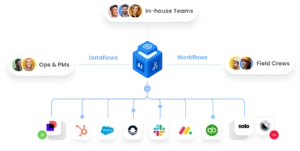
The better way is to connect those best in class tools through a common execution layer. When the deal changes status, relevant customer and project data can flow into the operational workflow without duplicate entry. Design updates can become available to the people scheduling and completing the job. Existing procurement or inventory systems can contribute readiness information without pretending that inventory needs to become a native feature of the execution platform.
This is the Central Operations Hub model. Rather than asking a growing business to abandon the tools it already uses for a rigid all in one platform, the company creates a connected stack around a shared execution layer.
A GLOO integration service can connect CRM, design, scheduling, accounting, and other systems so information moves between them as the project progresses.
That connected model makes the solar project handoff process more reliable because teams no longer depend on duplicate entry every time work passes between systems.
6. Keep Field and Office Teams Aligned on Real-Time Execution Data
Even a well designed sales to install handoff will break down if the office and field operate from different versions of the project.
Reliable execution requires one system of record for the information that tells teams what is happening now. That should include schedules, assignments, job status, field progress, photos, checklists, approvals, and other execution data.
Shared information matters because each team affects the next. A field update may change what an internal coordinator needs to do. An approval may release another task. A completed checklist may confirm that a job is ready to advance.
This is where Scoop functions as a Central Operations Hub for solar and field service teams. It connects cross functional workflows so field and office teams can work from the same execution record while continuing to use the specialized tools that support other parts of the business.
For teams managing installation and service work, field service management software can help create that operational consistency by bringing schedules, assignments, job status, field progress, and supporting information into the workflow.
The value is not simply greater visibility. It is trusted visibility. When the status in the system reflects what has actually happened in the field, reporting becomes more useful and teams can make decisions with confidence.
7. Close the Loop With Proactive Customer Communication
The handoff from sales to installation is also the start of the post sale customer experience.
Customers have moved from deciding whether to buy to waiting for the company to deliver. That change makes communication especially important during onboarding.
Delays may happen. A design may require additional work. An approval may take longer than expected. A schedule may need to change. The bigger retention risk is often not the delay itself but the silence around it.
Set clear customer communication points throughout the transition. Let customers know when the project moves forward, what the next step is, when expectations change, and when they need to take action.
Clean execution data makes those updates more trustworthy. If office teams can see the real job status, field progress, approvals, and upcoming work, they can communicate based on what is actually happening rather than chasing someone for an answer before every customer call.
That helps protect the relationship, reduce churn, and create a better foundation for retention and referrals.
Why Do Deals Stall Between Sales and Installation?
Deals often stall because important context, ownership, and project data do not move with the customer from one team to the next. Without a standardized process and connected systems, small gaps compound into delays, rework, and cancellations that affect the entire business.
What Happens When Deal Data Lives in Disconnected Tools?
When customer and project data are spread across CRM, design, scheduling, and other systems without a shared execution layer, context gets lost.
Teams may reenter the same information, work from outdated records, or assume another department has already completed a task. The problem is not necessarily that any individual system is bad. The problem is that the data does not move reliably between them.
That makes every handoff dependent on human coordination and increases the chance that important information disappears between teams.
Incomplete Site and Design Data Forces Rework
Incomplete surveys and design handoffs are not isolated mistakes. They are a structural problem when the process allows a project to advance without the data needed for the next stage.
If measurements, electrical conditions, photos, or design assumptions are incomplete, someone eventually has to correct them. That may require additional office work, a redesign, another site visit, or changes when the install crew arrives.
Teams need a shared standard for what information must be present before the project can advance.
How Do Silent Delays Drive Customer Cancellations?
Customer acquisition is expensive, which makes every signed deal valuable.
When a customer experiences a delay without an explanation, they may interpret the silence as a sign that the company has lost control of the project. Expectations begin to diverge from reality, trust declines, and the potential for churn increases.
Proactive communication cannot eliminate every delay, but it can prevent uncertainty from becoming a cancellation. Customers are more likely to understand a timeline change when they know what happened, what comes next, and when they will hear from the company again.
Common Mistakes That Break the Sales-to-Install Handoff
- Treating the handoff as an email instead of a defined process.
- Letting sales over promise timelines that operations cannot consistently meet.
- Skipping a standardized deal package before work moves downstream.
- Relying on manual notifications to tell the next owner when to start.
- Leaving CRM, design, and scheduling tools disconnected.
- Going silent on the customer after the sale instead of treating the transition as onboarding.
- Chasing a single all in one platform instead of connecting best in class tools through a common execution layer.
The point is not to remove every human interaction. Good handoffs still require judgment and communication. What often breaks them isn’t the people involved. It is a process that asks people to remember, reconcile, and recreate information that the system should already carry forward.
Fix Your Sales-to-Install Handoffs With Scoop
At Scoop, we help solar and field service businesses turn the sales to install transition into a connected execution workflow.
Scoop acts as your Central Operations Hub, connecting CRM, design, scheduling, and field teams through one execution layer so critical data and next steps move with the project. You can keep the specialized tools that already create value for your business without replacing the entire stack with an all in one platform.
Our solar project management software helps you create cleaner site data, faster scheduling, fewer dropped handoffs, stronger cross team visibility, and a more reliable customer experience.
If you want to reduce solar cancellations and ensure signed deals keep moving toward installation, book a demo with the Scoop team today.
Frequently Asked Questions About Sales-to-Install Handoffs
What Is a Sales-to-Install Handoff?
A sales to install handoff is the transition from a signed customer deal to a scheduled, buildable installation.
It typically connects sales, operations, design, permitting, scheduling, and install supervisors. A strong handoff helps every team understand what has already been promised, what information is available, what still needs to happen, and who owns the next step before installation can start.
How Do You Reduce Solar Cancellations After the Sale?
Teams can reduce solar cancellations by standardizing the information captured at close, validating site and design conditions early, and communicating proactively when the project status or timeline changes.
Those practices reduce surprises while helping customers maintain realistic expectations throughout onboarding. Better communication and more reliable execution can support retention by preventing avoidable uncertainty from turning into churn.
What Should a Sales-to-Install Handoff Checklist Include?
A solar deal handoff checklist should include customer and site information, financing status, site photos, utility information, signed documents, confirmed design details, and clear customer expectations.
The exact requirements will vary by company, but the key is to define what must be complete before the project moves forward. Step 2 provides the foundation for creating that standard.
What Software Helps Fix Sales-to-Install Handoffs?
Most teams need several specialized systems rather than one product.
A CRM manages the deal and customer relationship. Design or proposal tools support system design. Scheduling software helps coordinate installation work. The missing piece is often an execution layer connecting those tools so information moves between them through a centralized workflow.
Scoop serves as that Central Operations Hub, orchestrating the project rather than replacing the best specialized tools teams already use.
How Can Teams Get Best-in-Class Tools Without an All-in-One Platform?
Teams can use best in class tools without an all in one platform by connecting them through a common execution layer.
This approach lets a company choose the right CRM, design, scheduling, accounting, and other systems while keeping workflows and data connected between them. If the business later outgrows one tool, it can replace that component without replatforming the entire operation.
Scoop provides that hub layer, giving teams a modular way to evolve their technology stack while keeping the next handoff, workflow, and execution data connected.