Implementing solar operations and maintenance (O&M) is how operators protect energy output, revenue, and the long-term value of a renewable investment once an array leaves installation and goes live. A solar system rarely fails all at once; it slips quietly, losing production to soiling, drift, and unnoticed faults until the numbers no longer match the plan.
This guide covers the core components of an O&M program, a step-by-step path to implementing one, the metrics and SLAs that hold it accountable, the real costs involved, and the common mistakes that erode returns. It also frames how to think about tooling, because no single system covers the full O&M stack, and a connected set of best-in-class tools can give operators greater functional depth and flexibility than relying on a single all-in-one platform.
What Does Solar O&M Implementation Really Require?
Solar O&M is the ongoing discipline of keeping a photovoltaic plant producing at or near its designed capacity for the life of the asset. It consists of 2 interconnected disciplines: operations, the day-to-day monitoring and administration of plant operation, and maintenance, the physical work that keeps panels and equipment in good condition. Reliable plant operation depends on both pulling in the same direction.
In practice, a solar O&M program covers a handful of core components:
- Monitoring: continuous tracking of inverters, strings, and meters to catch underperformance at the panel or inverter level early.
- Preventive maintenance: scheduled inspections, cleaning, and torque or thermal checks that help keep equipment near its baseline.
- Corrective maintenance: the repairs triggered when a component fails or drifts out of spec.
- Inspections and testing: periodic visual and electrical reviews that surface issues instrument data may miss.
- Documentation and reporting: the record of every task, reading, and work order that turns raw activity into consistent records and reports for asset owners and other stakeholders.
Knowing what the scope includes is one thing; the reason to implement all of it becomes clear the moment you look at what a plant loses without it.
Why Does Implementing Solar O&M Protect Long-Term Investment?
Implementing solar O&M protects a long-term investment because a solar plant degrades in ways that stay invisible until they show up on the revenue statement. Dust and soiling shave off efficiency a fraction of a percent at a time. Micro-cracking spreads through cells after thermal cycling and heavy weather. Corrosion works into connectors and racking, and inverter faults pull whole strings offline. None of these announce themselves, and each one quietly chips away at power output.
Left alone, these problems compound. Neglected maintenance can accelerate component deterioration, increase unplanned downtime, and reduce the economic value delivered over the asset’s operating life. For owners, that is not just a technical setback; it is erosion of the commercial value the asset was built to deliver.
Disciplined O&M changes that outcome. Consistent monitoring and maintenance reduce the frequency and severity of faults, hold efficiency closer to the design curve, and keep the plant generating power through more of its intended lifespan. A well-designed O&M program can protect more production and asset value than it costs, but the business case should be evaluated using site-specific risks, expected losses, and service requirements.
That payoff only materializes when each part of the program is built deliberately, starting with the core components that make O&M work.
What Are the Core Components of a Solar O&M Program?
A working solar O&M program rests on 4 core components, each owning a different part of plant health. The key is not just having them, but connecting them so monitoring data flows into maintenance decisions and both feed clean management reporting. Treat any one component as optional and the whole system inherits the gap.
Performance Monitoring and Fault Detection
Monitoring is the data layer that makes everything else in O&M possible. Platforms and SCADA systems pull readings from inverters, strings, combiner boxes, and revenue meters, then flag the electrical faults and output dips that signal a problem. The monitoring system generates the alert, and the O&M team decides what it means and who responds.
Without this layer, underperformance hides in plain sight until a monthly production report finally exposes it, and by then the lost energy is gone for good. Strong fault detection turns vague hunches about a low site into specific, addressable issues.
Preventive Maintenance Schedules
Preventive maintenance is scheduled work done before anything breaks, and it can protect yield by identifying deterioration before it causes a larger failure or extended outage. Regular module cleaning removes soiling that quietly drags down output, while torque checks, thermal scans, and visual inspections catch loose connections and hot spots early. Keeping each panel and every piece of equipment within acceptable operating condition helps protect the production curve the plant was financed against. The right cadence flexes with the site, since a dusty desert array needs cleaning far more often than a rain-washed rooftop.
Corrective and Predictive Maintenance
Unlike preventive work that follows a calendar, corrective maintenance responds to failures that already happened, from a tripped inverter to a string that stopped reporting. Predictive maintenance sits in the middle, reading monitoring trends and acting when the data shows a component sliding toward failure. The distinction matters because corrective repairs on critical equipment usually mean unplanned downtime, while predictive action schedules the fix on your terms. A program that relies too heavily on corrective maintenance is more exposed to unplanned downtime, higher repair costs, and recurring service issues.
Field Documentation and Reporting
When field work, photos, checklists, and work orders are captured the same way every time, the resulting data becomes something owners can actually trust. Consistent documentation is what makes warranty claims defensible, keeps a full service history for each site, and lets management reporting reflect reality instead of guesswork. This is also where disciplined field service asset management pays off, because the record built on-site becomes the audit trail for performance, compliance, and reconciliation. Without consistent documentation, even well-executed maintenance is difficult to verify, report on, or use for warranty and compliance purposes.
With the 4 components defined, the real question is how to stand them up in the right sequence.
How to Implement a Solar O&M Program?
Implementing a solar O&M program is less about buying tools and more about sequencing decisions so the operation holds together as it scales. The path below moves from assessment to execution, and treating it as a real project, with owners, timelines, and management checkpoints, is what separates best practices on paper from an effective program in the field.
Assess Site Conditions and Baseline Performance
Start by capturing where the plant actually stands: current output against expected, a full equipment inventory, site access constraints, and every known issue. This baseline is the reference every later decision is measured against, and it draws on the wider discipline of renewable energy operations and maintenance rather than treating solar as a special case. Walk the site, pull historical data, and use inspections to document conditions before committing to a plan.
Budget belongs in the baseline too. Utility-scale PV operating costs typically land somewhere between $6 to $32 per kW-DC per year, a wide band driven by plant size, tracking, and site conditions, so pinning down where your plant sits sets realistic expectations.
Define Maintenance Plans and Response Protocols
Once the baseline exists, the maintenance plan defines how work actually happens: preventive schedules per asset class, corrective response paths, and clear escalation rules for failures. Weighting the plan toward preventive work rather than corrective firefighting is widely regarded as best practice, because front-loading inspections and servicing reduces both emergency repairs and the lifetime cost they carry.
The same thinking behind optimizing solar O&M applies here: an effective protocol gives every alert an owner, a target response window, and a defined path from detection to resolution. Get this balance right and the plant runs predictably instead of lurching from one failure to the next.
Choose the O&M Technology Stack
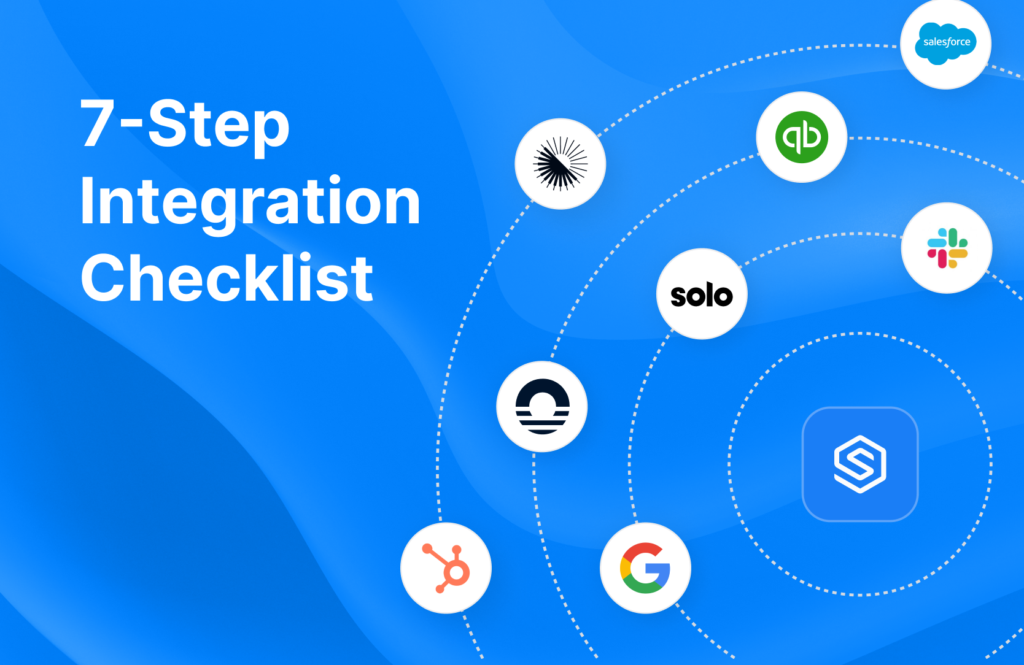
No single platform is likely to provide equal depth across every part of the O&M stack. Monitoring, field documentation, dispatch, SLA tracking, and invoicing each have purpose-built software that can go deeper than a generalist tool in its specific function, so the durable strategy is to pick best-in-class systems for each function and judge any solar O&M software on integration and workflow orchestration rather than feature checklists.
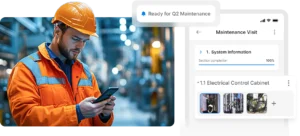
All-in-one suites look simpler at first, but some teams encounter
rigidity, vendor lock-in, and scaling friction as a portfolio grows across installs, service, and O&M. The piece that makes a best-in-class approach work is a central operational layer that coordinates how monitoring alerts, service workflows, billing milestones, and management reporting move between connected systems, reducing manual reconciliation. Kept in that frame, the stack stays flexible as the project scales and new issues emerge.
Standardize Field Workflows and Documentation
When field teams follow repeatable workflows, the same checklists, work orders, and handoffs happen on every job. A technician on one site then logs a task the same way as a technician on another, so the documentation stays comparable and the data actually rolls up. Standardized field work also shortens onboarding, cuts rework, and makes regular reporting a byproduct of the job rather than a separate chore.
Set KPIs and Reporting Cadence
Decide up front which KPIs prove the program is working and how often you will report them. A handful of production and output measures, tracked on a fixed cadence, keeps everyone honest about whether efficiency is holding or slipping. The next section breaks down which metrics matter most, so the discipline here is committing to a reporting rhythm and keeping it, which makes the metrics and SLA terms behind those reports worth defining precisely.
Which Metrics and SLAs Keep Solar O&M Accountable?
Metrics turn O&M from a set of activities into something you can hold accountable. The right measures provide a clear read on whether the plant is hitting its performance and production targets, and clear SLA terms turn those measures into contractual commitments. Without shared definitions and reliable data, reporting becomes opinion, and no one can say for certain whether efficiency or output is where it should be.
Performance Ratio and Energy-Based Metrics
Performance ratio is the core metric of solar O&M, expressing actual output as a share of what the plant should have produced under the conditions it saw. Alongside it, specific yield and an energy performance index compare real generation against modeled expectations, so a dip in any of them points straight at a problem worth investigating. These energy-based measures are the backbone of solar asset management, because they translate raw production data into a clear verdict on whether the plant is performing against its modeled expectations. Read together over time, they separate weather noise from genuine underperformance.
System Availability and Response Time
System availability measures the share of time the plant is ready to produce, and every hour it drops is potential revenue lost. Mean time to repair and response time track how quickly the team reacts once a fault appears, which is why they most directly reflect O&M execution. Faster response and repair reduce avoidable downtime, one of the central operational objectives of an O&M program.
Building SLA Terms Into O&M Contracts
Choose SLA targets that match how the plant actually earns: a performance ratio guarantee, a minimum availability threshold, and defined response and resolution windows for different fault severities. When those terms are written into O&M contracts, both the operator and the owner know exactly what good looks like and what happens when it slips. Clear SLAs also give management a fair basis to judge a provider, since expectations are set in numbers rather than promises.
Even a solid metrics and SLA framework, though, can be undercut by a handful of avoidable mistakes.
Common Mistakes When Implementing Solar O&M
Most O&M programs stumble in predictable ways, and steering around these mistakes does more to reduce risk than any list of best practices ever will:
- Skipping the baseline: without baseline data on output and equipment, you can’t separate normal from degraded, and every later decision rests on guesswork.
- Leaning on corrective maintenance: waiting for things to break trades small preventive costs for big emergency ones and far more unplanned downtime.
- Choosing an all-in-one that can’t scale: a suite that looks tidy at 5 sites turns rigid across 50, locking you into workflows you will outgrow.
- Weak documentation: patchy field records create issues at warranty-claim and audit time, exactly when proof suddenly matters.
- No SLA targets: without agreed numbers, accountability blurs and problems linger with no clear owner.
- Ignoring inverter warranty timelines: inverters are among the top causes of performance loss, and with service lives of 10 to 12 years against warranties near 5, planning replacement late becomes an expensive surprise.
Handle these well, and the final question is which system ties the whole program together.
Start Implementing Solar O&M With Scoop
Implementing solar O&M is at its core an operations problem, and it gets easier when monitoring, service, and billing run through one execution layer instead of disconnected tools. Scoop is a Central Operations Hub for solar O&M teams. It can connect compatible monitoring, service, reporting, and business systems based on your integration requirements, while giving operations teams a coordinated place to manage field execution, documentation, and follow-up without replacing every tool in the stack. To see how that works across your own portfolio, book a demo.
Frequently Asked Questions About Implementing Solar O&M
What Factors Affect the Timeline for Launching a Solar O&M Program?
The timeline depends on portfolio size, data quality, asset complexity, existing processes, service coverage, and the number of systems that need to be connected. A single site with established records may be set up relatively quickly, while a larger portfolio may require more time to baseline assets, define maintenance plans, configure workflows, and standardize reporting.
How Often Should Solar O&M Inspections Happen?
There is no universal schedule, because cadence follows site conditions. The practical approach is to set a preventive cadence per site during planning, then adjust it as monitoring data shows what each location actually needs.
What Is the Difference Between Preventive and Corrective Solar O&M?
Preventive O&M is planned work done before anything fails, such as scheduled cleaning, inspections, and torque checks that keep equipment near its baseline. Corrective O&M is the repair work that happens after a component faults or drifts out of spec.
How Can I Coordinate Different Solar O&M Software Tools?
Different systems may be used for monitoring, field service, asset records, accounting, and reporting. A Central Operations Hub can coordinate workflows and connected data between compatible systems, allowing each tool to retain its specialized role. The integration approach should be evaluated based on available APIs, required data mappings, trigger conditions, and ongoing support.
Who Should Handle Solar O&M, In-House or a Third-Party Provider?
Both models work, and the right choice depends on scale and internal capacity. Large operators and energy companies with steady headcount often build in-house teams, while owners of smaller or geographically scattered portfolios frequently outsource to specialized providers.