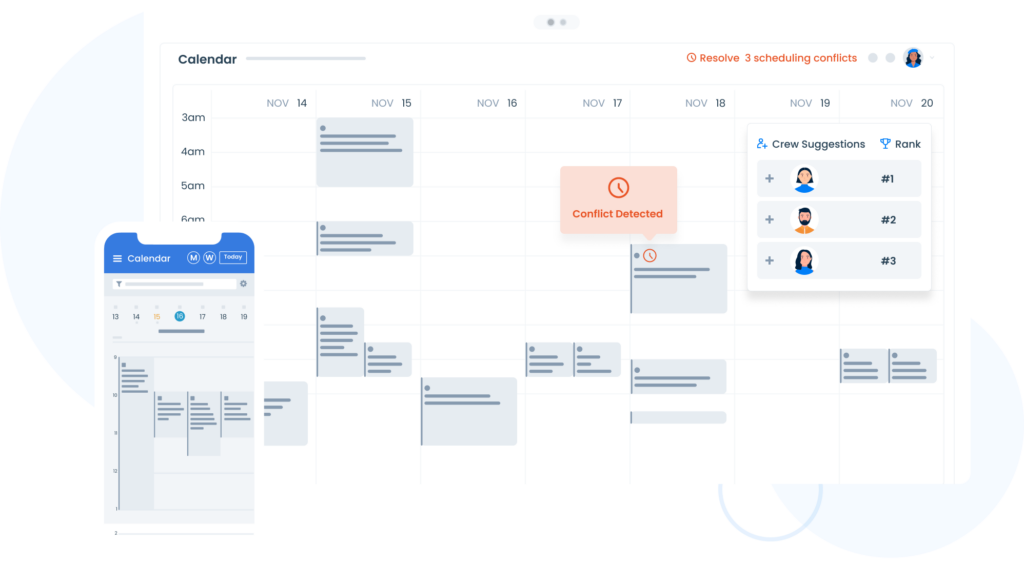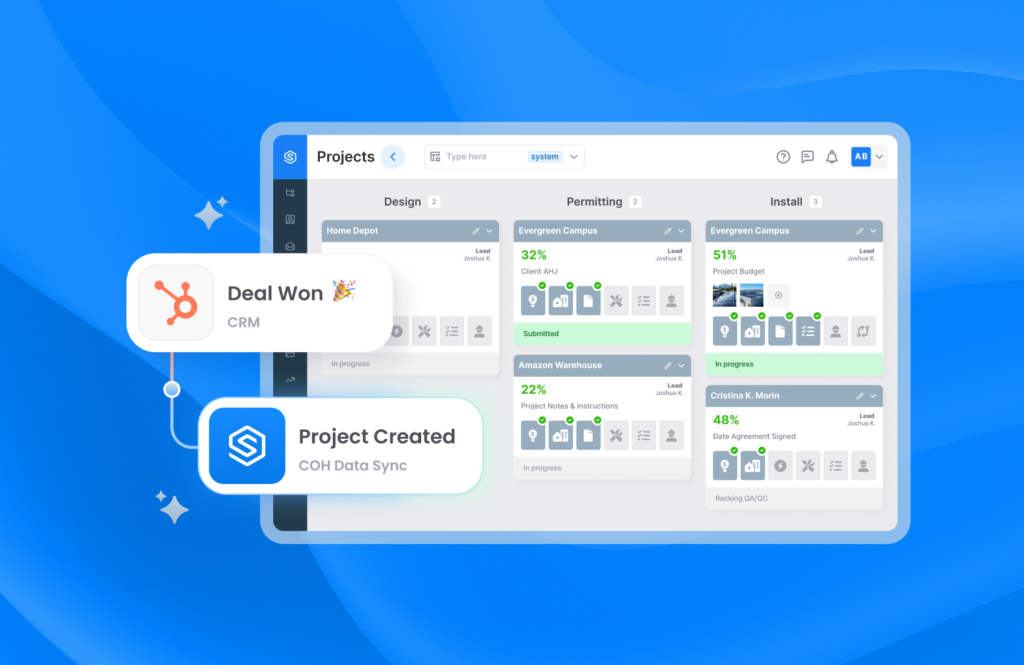
Data silos hurt decision-making in field service because your CRM, dispatch, field reporting, inventory, and invoicing systems each hold one part of an installation, service call, or maintenance visit, so managers decide from partial numbers. Dispatchers send technicians without parts information, finance cannot see job profitability, and leaders debate reports instead of acting on them. A central operations hub connects those systems without replacing them.
Key Takeaways
- A data silo, also called an information silo, is job information held in one system or team that the other teams who need it cannot reach.
- Leaders and teams spend 25% of their workweek searching for information, and only 7% of executives are confident they know how each team’s work supports company goals, according to Atlassian’s State of Teams 2025.
- Siloed data hurts five field service decisions most: who to dispatch, whether a job made money, how to re-plan the day, what to promise a customer, and when to schedule maintenance.
- A repeat site visit costs between $500 and $1,500, depending on whether it is a service call or an installation project, and missing parts or service history is a common cause.
- Recurring service and O&M contracts carry the most risk, because preventive maintenance and SLA reporting depend on an asset history that siloed systems split apart.
- You can break down data silos in 6 steps without replacing your CRM or accounting software: audit, assign a system of record, prioritize handoffs, standardize field data, connect, and measure.
What Is a Data Silo in Field Service?
A data silo, also called an information silo, is business data held in one system or by one team that other teams cannot easily access, so each department works from its own version of the facts.
The two terms are usually used interchangeably. Information silo is sometimes used more broadly, to include knowledge that lives in a person’s head or inbox rather than in software. In field service, that includes the senior technician who remembers every site, and the dispatcher’s spreadsheet of which crews carry which parts.
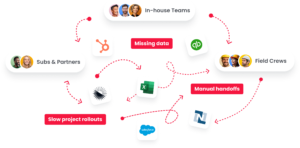
In a field service business, a silo usually means one job is split across several systems. The CRM knows the customer and the contract, the dispatch board knows the schedule, the technician’s app knows what happened on site, and the accounting system knows whether the invoice went out.
None of them can tell you what the job cost and what it earned.
| Term | What it means | Field service example |
|---|---|---|
| Data silo | Data held in one system that other systems and teams cannot reach | Parts used on a job are recorded in the field app but never reach invoicing |
| Information silo | Knowledge held by one team or person, in software or not | Only one dispatcher knows which sites need a key from the property manager |
| Process silo | A workflow that stops at a department boundary and restarts by hand | Sales closes a service contract and operations hears about it by email days later |
| System of record | The one agreed home for each type of data, which every team reads from | The asset register lives in one system, and technicians, O&M managers, and sales all see the same history |
Where Do Data Silos Form in Field Service Operations?
In field service, a silo forms when information is stored in one system but is not easily accessible to the teams that need it. This often happens when CRM, dispatch, scheduling, invoicing, field reporting, and customer communication tools operate as separate software platforms.
A CRM may store customer records, sales notes, and contract details. Dispatch software manages technician schedules and job assignments. Mobile field service apps capture photos, forms, and technician updates. Accounting systems handle invoicing and payment information. Each of these tools supports a specific part of operations and management.
As companies grow, different departments often adopt new tools to solve their own challenges. Sales uses a CRM, operations uses dispatch software, finance uses accounting systems, and field teams rely on mobile reporting apps. Without an integration layer connecting those systems, customer records, job data, and field documentation become isolated across multiple platforms.
The result is that information remains stored in separate systems instead of flowing through a single operational workflow. Teams lose visibility, handoffs become harder to manage, and different departments end up working from different versions of the same job.
Why Do Data Silos Form as Field Service Companies Grow?
A 5-person team can often coordinate field service work through spreadsheets, phone calls, shared calendars, and a handful of employees who know every customer and job. At that stage, disconnected systems may not feel like a major problem because the team can fill gaps manually.
As the company grows to 20+ technicians, that approach becomes harder to sustain. New departments form, responsibilities become more specialized, and teams adopt new software for sales, dispatch, field service management, invoicing, inventory, and reporting.
Official data shows the same pattern. In 2025, 89% of large EU enterprises used ERP software and 65% used CRM software, compared with 41% and 25% of small enterprises, according to Eurostat. Every system you add as you grow needs a connection to the systems around it, or it becomes one more place job data gets stuck.
The most common causes of data silos in field service are:
- Departments buying software to solve their own problem, with nobody responsible for the data flow between them.
- Acquisitions that bring a second CRM, a second accounting system, or a different field app into the business.
- One-way integrations that push data from sales to operations but never send job status back.
- Custom integration code written by someone who has since left, which nobody on the current team can change.
- Temporary workarounds, such as spreadsheet trackers and email approvals, that become permanent.
New hires inherit the existing tool stack and processes without questioning why systems are disconnected. Over time, the organization becomes dependent on workarounds, manual updates, and informal knowledge to keep information moving between teams.
Which Systems Create Data Silos in Field Service?
Most field service data silos originate from the same core systems:
- CRM platforms (such as Salesforce and HubSpot) that manage leads, opportunities, customer records, and contract data.
- Dispatch and scheduling software that manages technician assignments, routes, and job calendars.
- Field reporting applications that capture technician notes, photos, forms, and work completion details.
- Accounting and invoicing software that manages billing, payments, and financial reporting.
- Inventory management platforms that track parts, equipment, and warehouse availability.
- Customer communication tools that manage appointment reminders, service updates, and follow-up messages.
Each system serves a specific purpose, but each also stores only one slice of the job lifecycle. No single system contains the complete picture from lead to completed work to payment. As companies adopt multiple technology tools across different departments, information becomes fragmented across separate systems.
For example, a technician may close a work order in a field reporting app, but if that update never reaches the billing team, the invoice may sit for days. The work is complete and ready to bill, but revenue is delayed because different software systems are not sharing information.
How Do Data Silos Hurt Decision-Making in Field Service?
Data silos hurt decision-making in field service because every decision about a job depends on information that sits in a different system from the person making it. Dispatchers need parts and service history, finance needs labor and materials, and leaders need all of it in one report. When each system shows one slice, people make confident decisions on incomplete numbers.
The problem is widespread. Leaders and teams spend 25% of their workweek searching for information, and only 7% of executives feel confident they know how each team’s work supports their biggest company goals, according to Atlassian’s State of Teams 2025 survey of 12,000 knowledge workers and 200 executives in the US, UK, Germany, France, India, and Australia.
These are the field service decisions that suffer most when data is siloed:
| Decision | Who makes it | Information needed | Where it sits when siloed |
|---|---|---|---|
| Which technician to send | Dispatcher | Skills, parts on the truck, and service history | Field app, inventory system, and CRM |
| Whether a job made money | Finance and operations leaders | Labor hours, parts used, change orders, and the invoice | Timesheets, field app, and accounting software |
| How to re-plan the day when a job runs long | Dispatcher | Live job status and travel times | Field app and scheduling tool |
| What to promise a customer | Customer service | Stock levels, site notes, and technician availability | Inventory system, field app, and scheduling tool |
| When to schedule preventive maintenance | Service or O&M manager | Asset history, warranty terms, and SLA dates | Field app, contract files, and CRM |
| Where to invest or hire | Leadership | Margin by service line, region, and customer | Every system above |
Dispatch Decisions Made Without Parts or Service History
When dispatchers cannot see inventory or service history, technicians arrive without the right parts and first-time fix rates fall. A dispatcher who assigns a job from the schedule alone cannot see that the part is out of stock, that the last visit flagged a failing component, or that the site needs a specific certification. Each of those gaps can turn one visit into two.
Job Profitability Hidden Between Finance and Field Data
Siloed data hides job profitability because finance sees invoice status while field managers see labor hours, and neither sees both. Without the two together, you cannot tell which contracts, customers, job types, or regions make money. A job can look profitable in accounting and still lose money once the return visit, the overtime, and the parts that never reached the invoice are counted. You then renew the wrong contracts and price the next job from the same incomplete numbers.
Scheduling That Reacts Instead of Re-Planning
Without live job status flowing from the field to the schedule, dispatchers cannot re-plan routes when a job runs long. They usually find out when the next customer calls to ask where the technician is. The result is missed service windows, overtime to finish the day, and appointments pushed to tomorrow.
Customer Commitments Made Without Field Context
Customer service teams make promises they cannot keep when they cannot see inventory or technician notes. A rep may confirm a repair date without knowing the part is on back order, or book a standard visit for a site the technician flagged as complex. The customer then repeats the same story to sales, dispatch, the technician, and billing. Customers remember missed commitments like these when a service contract comes up for renewal.
Maintenance Plans Built Without Asset History
Recurring service and O&M work depends on asset history more than any other part of field service. Preventive maintenance schedules, warranty claims, and SLA reports all need the full record of every visit to an asset. In a siloed operation, that record is split between the field app, the contract files, and the CRM, so service managers schedule maintenance by the calendar instead of by the condition of the equipment, and struggle to prove to a client that the SLA was met.
The stakes are highest on critical equipment. Data center field service management is a good example: operators expect every maintenance visit, inspection, and repair on live equipment to be documented and auditable. Asset history also breaks at the handover from construction to operations, so optimizing data center construction should include a plan for how commissioning records and as-built documents reach the maintenance team.
How Do Data Silos Reduce Field Service Revenue?
Data silos reduce revenue by creating gaps between work performed, information captured, and revenue collected. According to IDC, companies can lose between 20% and 30% of annual revenue due to inefficiencies created by disconnected data and siloed systems.
For field service businesses, those costs often appear as missed billing opportunities, inaccurate quoting, slow invoicing, and valuable customer insights that never reach the sales team.
A technician may identify a worn component, an expansion opportunity, or a recurring issue during a service visit. If that information remains trapped in a field reporting system, it never becomes a sales lead or follow-up opportunity.
Likewise, completed work may include additional labor, parts, or scope changes that never reach billing. The result is underbilling, delayed invoices, and revenue that the company earned but struggles to capture.
These are not isolated incidents. Across hundreds or thousands of service calls each year, disconnected systems can create substantial revenue leakage that directly impacts profitability.
Why Do Billing Discrepancies Cause Revenue Leakage?
Billing discrepancies happen when field data and finance data do not match. The technician may complete the work, but the billing team may not have the final photos, parts used, labor time, change order details, or customer sign off.
That creates three profitability problems.
First, the company may underbill for completed work. If extra labor or materials are captured in the field but not transferred to billing, revenue is lost.
Second, the company may overbill or bill incorrectly. That damages customer trust, creates disputes, and adds more admin work to correct the mistake.
Third, invoicing slows down. When finance has to chase operations for documentation, cash collection cycles stretch. The job is complete, but payment is blocked by missing information.
Individually, these discrepancies may seem minor. A missed hour of labor, an unbilled material charge, or a delayed invoice on a single job may not significantly impact the business. However, when those issues occur across dozens of jobs each week, the result can be substantial annual revenue loss. Small field-to-billing disconnects compound over time, creating hidden profitability leaks that many companies do not discover until they begin analyzing their operational data more closely.
How Do Silos Block Upsell Opportunities Between Sales and Field Teams?
Field technicians often have the best customer insights in the company. They see equipment condition, site constraints, recurring problems, customer frustrations, and future service needs firsthand.
But sales teams often do not have access to those insights.
In many field service organizations, customer data exists in both the CRM and the field reporting system. Sales can see account history and opportunities, while field teams can see service records, technician notes, and asset information. When those systems are not connected, each department only sees part of the customer story.
A technician may identify a need for an upgrade, repair, maintenance plan, or expansion project during a visit. If that insight stays in a field reporting tool, the sales team may never see it.
This lack of collaboration creates missed revenue opportunities. The company has the information needed to generate new business, but it is stored in a different system that the right team cannot easily access.
What Hidden Costs Eat Into Field Service Profitability?
The hidden costs eating into field service profitability are the hours and trips that never show up as a line item: office staff re-entering data, dispatchers chasing updates, repeat truck rolls, overtime spent reconciling reports, and invoices waiting on paperwork.
Office staff re-enter customer data. Dispatchers call technicians for updates. Technicians call the office for information that should be in their mobile app. Managers pull reports from multiple systems and spend hours reconciling conflicting numbers.
Skilled employees spend that time fixing preventable system gaps when they could be improving operations, serving customers, or adding capacity. This table shows where each hidden cost appears and the metric that exposes it:
| Hidden cost | Where it shows up | Metric that exposes it |
|---|---|---|
| Duplicate data entry | Office staff re-typing customer and job details into each system | Admin hours per job |
| Repeat truck rolls | Technicians returning because parts or information were missing | First-time fix rate |
| Delayed invoicing | Finance waiting on photos, sign-off, and parts used | Days from job completion to invoice |
| Underbilling | Extra labor and materials that never reach the invoice | Billed versus recorded labor and parts |
| Overtime | Staff reconciling reports and re-planning the day by phone | Overtime hours per week |
| Missed upsell | Technician findings that never reach sales | Field-sourced leads per month |
| Lost service contracts | Missed commitments and SLA disputes | Renewal rate on service contracts |
Duplicated Administrative Work From Disconnected Systems
Disconnected systems force office teams to enter the same data multiple times.
A customer address may be entered in the CRM, copied into the scheduling tool, added to a field app, and entered again into accounting software. Job details may move from email to spreadsheet to dispatch board to invoice.
For many field service businesses, this repetitive work consumes several hours each week. Every manual transfer creates opportunities for transcription errors, scheduling mistakes, and billing issues that would not exist if systems shared data automatically.
Re-entering information pulls staff away from higher-value tasks like customer follow-up, dispatch optimization, and operational improvement. Teams spend time maintaining data instead of using it to improve performance.
It also creates frustration. Employees know the work is redundant, but without connected systems, they have little choice but to continue managing information manually.
Scheduling and Dispatch Inefficiencies From Siloed Data
Scheduling and dispatch depend on real time operational visibility. When dispatchers lack current field data, they make decisions with incomplete information.
A technician may be sent to a job without the right parts. A crew may arrive before required documentation is complete. A dispatcher may assign overlapping appointments because one system shows outdated availability. A service visit may require a repeat truck roll because the technician did not have full service history.
Each wasted trip carries direct costs: fuel, labor time, vehicle wear, missed capacity, and customer goodwill. It also reduces first time fix rate, which is one of the clearest operational indicators of field service profitability.
When data is siloed, dispatch management becomes reactive. Teams make decisions based on partial information, then spend the rest of the day correcting the result.
How Do Siloed Systems Weaken Field Service Decision-Making?
Siloed systems weaken field service decision-making because leaders are forced to rely on fragmented data from disconnected tools instead of a complete operational view. This challenge is becoming increasingly important, with 43% of COOs identifying data quality as a top business priority. When data is spread across multiple systems, executives struggle to make confident, data-driven decisions.
A dashboard may show job completion rates but not margin. Another report may show sales pipeline but not install capacity. A finance report may show revenue but not the field delays that caused margin erosion.
This lack of connected insights creates strategic blind spots. Leaders may not see which service lines are most profitable, which technicians need training, which customers are at risk, or which regions are underperforming.
Data driven decisions require accurate, complete, and timely information. Without that, companies may make plans based on reports that look precise but miss the operational context behind the numbers.
What Happens When Reports Draw From Fragmented Data?
Fragmented reporting produces partial truth.
A dispatch tool may show scheduling performance but not customer satisfaction. The CRM may show pipeline activity but not job completion rates. The accounting system may show revenue but not the operational issues affecting profitability.
Each report may be accurate within its own system, but no single report captures the full field service picture.
That makes it difficult to answer basic business questions. Which job types produce the strongest margins? Which customers create the most service burden? Which teams complete work correctly the first time? Which bottlenecks delay billing?
When every department reports from different tools, leadership spends more time debating numbers than making decisions.
Strategic Blind Spots Created by Siloed Operations Data
Siloed operations data makes it harder to manage growth profitably.
Without a unified operational view, leaders may struggle to identify which service types generate the strongest margins, which technicians need additional training, which customers are at risk of churn, or which geographic regions are underserved. Critical information exists within the organization, but it is spread across siloed systems that do not provide a complete picture.
These blind spots make it harder to align operational goals with business performance. Leaders often end up making decisions based on incomplete information and only discover a problem after margins decline, customer satisfaction drops, or growth slows.
A unified operational view gives teams access to the insights needed for proactive planning. Instead of reacting to issues after they occur, organizations can identify risks earlier, optimize resources, and make more informed decisions about future growth.
What Symptoms Reveal Data Silos in a Field Service Organization?
Data silos are often visible before they are formally measured. The symptoms show up in daily operations.
A field service organization may have a data silo problem if teams often ask where a number came from, or if different departments report different versions of the same job status.
Another common sign is billing delays after job completion. If finance needs to chase field teams for documentation, the handoff is broken.
Technicians calling the office for job details, customer history, asset information, or parts status is another warning sign. That information should be available in the field at the point of work.
Customer complaints are also a signal. If customers have to repeat information to sales, dispatch, technicians, and billing, the company may be operating through separate systems instead of one connected workflow.
How Can Field Service Companies Break Down Data Silos?
To break down data silos, field service companies need to focus on operational integration, not tool replacement.
Start by auditing current data flows. Map where information enters the business, which software systems teams use, where data is duplicated, and where it gets stuck. Then identify the most critical integration points, such as CRM to operations, dispatch to field execution, field reporting to billing, and asset history to technician mobile access.
From there, companies can select a central operations platform that connects existing tools into one workflow. Bi-directional syncs between CRM, dispatch, scheduling, and field tools help make sure updates move both ways instead of staying trapped in one system.
Teams also need standardized data entry protocols so information is captured consistently within each department. Finally, train teams on the unified workflow so better integration leads to better collaboration across the organization.
Audit Current Data Flows Across All Systems
A data flow audit shows how information actually moves through the business.
Document each system involved in the job lifecycle, from lead capture to completed service to invoice. Identify where data enters the business, how it transfers between different systems, where it gets duplicated, and where it gets stuck.
Look for manual exports, spreadsheet trackers, email approvals, and status updates that depend on someone remembering to notify another department. Identify which handoffs are manual and which are already automated.
This audit helps the company see the true scope of the silo problem. It also helps leaders prioritize which integrations will have the greatest impact on profitability.
For example, connecting field completion data to billing may improve cash flow faster than building a new executive dashboard. Connecting CRM data to operations may reduce handoff errors faster than adding another reporting tool.
The best integration plan starts with operational pain, not technology for its own sake.
Connect Field Service Systems Through a Central Operations Platform
A Central Operations Hub connects existing tools into one operational layer. Instead of forcing the company to abandon its CRM, accounting software, scheduling tools, or field apps, it helps those systems share data around a single workflow.
Scoop is built for this model. As field service management software, Scoop helps field service companies manage work across sales, scheduling, field execution, documentation, and reporting from one connected operational layer.
With Scoop, teams can standardize workflows, enforce data consistency, and create visibility across departments. Sales data can move into operations. Field updates can trigger office workflows. Completed work can support faster billing. Leaders can view real time operational data without waiting for manual reports.
For companies with multiple systems, Scoop’s GLOO integration service helps connect the stack through managed integrations, including real time data flow between tools. That means teams can keep the systems they need while reducing disconnected handoffs that drain profitability.
What Integrating CRM and Field Service Software Fixes
Once you connect the systems that hold customer, scheduling, and job data, the hidden friction between departments starts to disappear. Shared records remove duplicate entry, dispatch works from the same customer context as sales, and billing triggers the moment field work is marked complete. Each of these gains compounds as volume grows, which is why the benefits of CRM and field service software integration show up first in the handoffs that used to leak time and revenue.
How Do You Know Your Data Silos Are Gone?
You know your data silos are gone when the metrics tied to handoffs improve and stay improved. Most teams see less duplicate data entry as soon as the first integrations go live, and reporting improvements usually follow within 4 to 8 weeks as data quality settles.
| Metric | What it tells you | Direction you want |
|---|---|---|
| First-time fix rate | Technicians arrive with the right parts and information | Up |
| Repeat truck rolls per month | Fewer return visits caused by missing information | Down |
| Days from job completion to invoice | Field data reaches finance without chasing | Down |
| Admin hours spent re-entering data | Systems share data automatically | Down |
| Time to build the monthly operations report | Reports draw from one connected source | Down |
| SLA compliance on service contracts | Maintenance history is complete and provable | Up |
Common Mistakes When Breaking Down Data Silos
- Replacing every tool at once. A full replacement retrains every team at the same time and still leaves systems, such as accounting, that need connecting.
- Adding another point solution. A new reporting tool or form app adds one more place for job data to live.
- Building one-way integrations. New jobs reach operations, but completion status never returns to sales or finance.
- Connecting before cleaning. Duplicate and inconsistent records get copied into every connected system.
- Relying on custom code nobody owns. An integration written by a developer who has since left can break without warning, and nobody on the team can fix it.
- Leaving nobody in charge of the data flow. Silos form again as soon as the next department buys a tool on its own.
Eliminate Silos to Protect Field Service Profitability
Data silos field service teams create are rarely intentional. They usually form because the business grows, departments add tools, and no one owns the full data flow from sales to field to finance.
But the impact is real. Siloed systems increase costs, slow billing, weaken reporting, block upsell opportunities, and make growth harder to manage.
Field service profitability depends on operational clarity. Teams need access to the same accurate information. Leaders need a single view of performance. Technicians need the right job data in the field. Finance needs complete documentation without chasing updates.
A Central Operations Hub gives companies a practical way to break down data silos field service teams struggle with every day. By connecting existing tools, standardizing workflows, and creating shared visibility, Scoop helps field service businesses reduce manual work, improve collaboration, and protect margins as they scale.
How Scoop Connects Field Service Data Across Your Systems
Scoop is built as a central operations hub. As field service management software, Scoop helps field service companies manage work across sales, scheduling, field execution, documentation, and reporting from one connected operational layer.
With Scoop, teams can standardize workflows, enforce data consistency, and create visibility across departments. Sales data can move into operations. Field updates can trigger office workflows. Completed work can support faster billing. Leaders can view real-time operational data without waiting for manual reports.
For companies with multiple systems, our GLOO integration service is fully hosted and managed. We scope each integration against how your operation runs, build it, and maintain it. Because each integration is a visual flow rather than custom code, your team can open it and change it later. Scoop connects to the systems around it by category, including CRM, accounting and invoicing, design and proposal, inventory and warehouse management, and monitoring platforms.

We treat recurring service as a first-class use case. Preventive maintenance schedules, recurring work orders, warranty and SLA evidence, and full asset history sit in the same system as new installations, so the dispatcher, the technician, and the client report all draw from one record. Every plan includes unlimited users, storage, and devices, so office staff, technicians, and subcontractors can all work in the same system instead of keeping side spreadsheets.
RWE reports saving over $1.4 million a year using Scoop.
Frequently Asked Questions About Data Silos in Field Service
What Is the Difference Between a Data Silo and an Information Silo?
A data silo usually refers to structured data locked inside one software system, such as parts usage stored only in a field app. An information silo is broader and includes knowledge held by people or teams, such as a dispatcher who knows which sites need special access. Most field service businesses have both, and connecting systems solves the data silo while shared workflows solve the information silo.
What Hidden Costs Eat Into Field Service Profitability?
The hidden costs eating into field service profitability are duplicate data entry, repeat truck rolls, delayed invoicing, underbilling for labor and parts, overtime spent reconciling data, missed upsell opportunities, and service contracts lost after missed commitments. None of them appears as a line item, which is why they often go unmeasured until you connect field, finance, and CRM data.
How Do Data Silos Affect Field Service Technician Productivity?
Data silos force technicians to spend time on admin tasks instead of completing field work. They may need to call the office for job details, re-enter updates into separate tools, or wait for parts information from disconnected inventory systems. These delays reduce the number of jobs technicians can complete each day, lowering productivity and limiting overall team capacity.
How Do Data Silos Affect Recurring Maintenance and O&M Contracts?
Data silos weaken recurring maintenance and O&M contracts because preventive maintenance, warranty claims, and SLA reports all depend on complete asset history. When that history is split across a field app, contract files, and the CRM, service managers schedule maintenance by the calendar and struggle to prove SLA compliance to the client. Keeping asset history in one system of record, as on our field service management software, fixes both problems.
Can Field Service Companies Break Down Data Silos Without Replacing Existing Software?
Yes. Many companies can reduce data silos by connecting existing software through APIs, bi-directional integrations, and a central operations hub. This allows teams to continue using familiar CRM, dispatch, and field service tools while gaining a shared operational layer that keeps information synchronized across systems.
How Long Does It Take to See Results After Breaking Down Field Service Data Silos?
Some results can appear as soon as key integrations go live, especially reductions in duplicate data entry and faster information flow. Full reporting improvements may take 4 to 8 weeks as data quality stabilizes and teams adopt the new workflow. Operational gains typically continue improving over the next quarter as processes are refined.