
Monitoring project timelines and milestones in field service helps teams keep planning, scheduling, dispatch, on-site work, closeout, and billing aligned across every phase of the process. Without an active schedule, timeline, and milestone monitoring process, a small delay can become a missed handoff, a late job, or delayed invoicing. This guide explains how to monitor progress, identify slippage early, and use connected operational data to keep field service projects moving.
Why Does Timeline and Milestone Monitoring Matter in Field Service?
Timeline and milestone monitoring is an operational priority because field service work moves through dependent phases. A missed permit approval, late parts delivery, or delayed inspection sign-off can push the next task, disrupt the crew schedule, and prevent the team from completing critical deliverables on time.
The consequences extend beyond the project date. Delays can leave crews idle, increase coordination work, create customer frustration, and postpone billing. In an industry report by Levelset and Fieldwire, fewer than 30% of construction businesses said they always completed projects on time and within budget, illustrating how difficult consistent execution can be when many teams, suppliers, and dependencies are involved.
Field service project timeline monitoring shows leaders where work stands before a late weekly report reveals the damage. That visibility protects capacity, customer commitments, and cash flow.
Project Milestones and Timelines Defined for Field Service Teams
A project timeline is the full sequence of dependent tasks, with a planned start date, end date, duration, and relationship to other work. It provides a clear view of how the project should move from one phase to the next.
A milestone is a fixed checkpoint that confirms a phase, approval, or deliverable has been reached. Milestones do not represent the work itself. They are set markers used to verify that key deliverables are complete before the next task or phase begins.
How Do Milestones Differ From Everyday Field Service Tasks?
A task is a specific work item that requires time, effort, and ownership. A milestone is a zero-duration checkpoint used to confirm that a task group, approval, or phase is complete.
For example, conducting a site survey is a task, while “site survey approved” is a milestone. Other key milestones include equipment delivered, installation complete, inspection passed, and job closed out. These checkpoints show whether work can move forward.
Key Milestones Across the Field Service Project Lifecycle
The major milestones in a field service project often follow this lifecycle:
- Contract signed: The project is authorized to start.
- Design or survey approved: Required technical deliverables are reviewed and accepted.
- Schedule confirmed: Dates, crew assignments, and resources are committed.
- Crew dispatched: Field service dispatch has been initiated and the team has the information needed for execution.
- On-site execution complete: Installation, maintenance, or repair work is finished.
- Inspection or QA passed: Required verification and sign-off are complete.
- Closeout and invoicing: Final documents are accepted, the project reaches its end state, and billing can proceed.
These milestones can be adapted to the specific phases, approval events, and deliverables within each field service management workflow.
How Do You Monitor Field Service Project Timelines in Real Time?
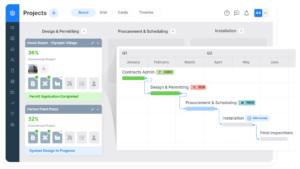
Monitoring project timelines and milestones in field service requires more than a static project plan. Teams need a shared schedule, field updates submitted as work happens, automatic status changes, and alerts when a task or milestone moves beyond its planned date.
This creates real-time field service project visibility. With field, schedule, and office data in one connected view, managers can monitor progress without waiting for spreadsheet consolidation or re-entry.
Using software for field service schedule tracking also makes dependencies easier to manage. When one task is delayed, the team can see which downstream work, resources, and customer commitments may be affected.
What Data Keeps Timeline Tracking Accurate?
Accurate tracking depends on a consistent set of operational inputs:
- Current task status
- Planned and actual start and end dates
- Crew schedules and assignments
- Job status and field progress updates
- Dependency links between tasks and milestones
Field-submitted job status, documentation, and progress data keep the schedule current without office re-entry. This gives the team a more accurate way to track field service project progress.
Real-Time Field Updates That Signal Schedule Slippage
Early warning signs often appear before a project is officially late. A milestone date may move, a task may start behind schedule, a dependency may remain blocked, or a job status may stay unchanged longer than expected.
Managers need a way to monitor these signals without relying on GPS or crew location data. Visibility into schedules, assignments, job status, and field progress is enough to identify many risks early. With that information, leaders can rebalance the schedule, reassign work, or resolve a blocked dependency before delays affect the full timeline.
Which Metrics Measure Milestone and Timeline Performance?
Field service milestone tracking should use a practical set of key performance indicators. These metrics help leaders review whether projects are meeting operational goals, monitor patterns across the portfolio, and identify where work is less likely to complete as planned.
On-Time Completion Rate and Schedule Variance
On-time completion rate is the percentage of jobs completed on or before the planned date. Divide the number of jobs completed within schedule by the total number of completed jobs.
Schedule variance compares planned dates with actual dates. It shows whether a project, phase, or task finished early, on time, or late. Reviewing both metrics helps leaders distinguish between isolated exceptions and a recurring schedule problem.
Leading Indicators That Predict Delays
Leading indicators help identify field service project delays before final completion. Important measures include milestone slippage rate, percent complete versus planned, mean time-to-completion trends, and overdue task count.
Milestone slippage rate shows how often checkpoints move beyond original dates. Percent complete versus planned measures execution against schedule. Mean time-to-completion reveals speed trends, while overdue task count highlights unresolved work. Together, these tracking metrics help managers intervene early.
Common Challenges in Monitoring Field Service Timelines
Timeline monitoring often breaks down because the process depends on disconnected tools, manual work, and inconsistent team updates. Without a shared operational view, delays remain hidden until they affect customers, crews, or billing.
Why Do Disconnected Tools Create Timeline Blind Spots?
When scheduling, field execution, reporting, and accounting live in separate software, no single system reflects the real state of the project. A schedule may show that a job is ready while the field tool shows incomplete work, or the accounting system may be waiting for documents that operations considers complete.
Without connected tracking, managers reconcile systems instead of managing the process. Lagging reports increase costs, while fragmented data contributes to delayed workflows, reduced efficiency, and unreliable decisions.
Manual Status Updates and Stale Schedule Data
Manual status updates lag reality. By the time field notes reach a spreadsheet and report, the schedule may already be outdated.
Using manual re-entry also increases the chance of missing or inconsistent information. Teams cannot keep field service project timeline monitoring accurate without timely updates, and stale data hides delays until there is little room to correct them.

The Cost of Losing Timeline Visibility
Poor timeline visibility causes late delivery, idle crews, billing delays, and rework. Resources may be assigned to unready jobs, while missing field documentation delays closeout and invoicing.
These effects put pressure on the project budget and reduce execution capacity. The cost is rarely limited to one missed date. It spreads across labor, customer service, reporting, and cash flow.
What Are the Best Practices for Tracking Milestones in Field Service?
The best field service milestone tracking approach combines clear planning, connected data, and a consistent review cadence. Teams should plan milestones before work begins, set measurable completion rules, and keep schedule and field information aligned throughout execution.
Set Clear, Measurable Milestones During Planning
During planning, create each milestone with a specific owner, due date, and completion criteria. Tie it to a clear deliverable, approval, or phase outcome so the team knows exactly what must happen before work can proceed.
A strong plan avoids vague labels such as “design done” or “job ready.” Instead, set milestones such as “approved design uploaded” or “inspection sign-off received.” This makes progress unambiguous and helps managers identify whether required deliverables are truly complete.
Centralize Schedule, Field, and Reporting Data
Centralizing schedule, field execution, and reporting data creates a system of record that updates as work happens. Teams can use current information to manage dependencies, assign resources, and keep the process moving without rebuilding the timeline in multiple tools.
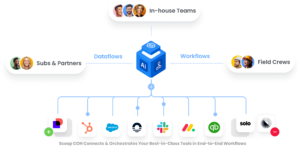
Centralization does not require replacing every specialized application with one rigid platform. Growing field service teams often need best-in-class tools connected by a common execution layer. A Central Operations Hub supports that model by coordinating data and work across the existing software stack.
How Often Should Field Teams Review Timeline Progress?
Teams should review field status daily, milestones weekly, and phase readiness at each major checkpoint. Daily checks surface active blockers. Weekly reviews assess field service schedule tracking, milestone movement, resource needs, and broader risk.
The right cadence depends on project length, complexity, and risk. A short repair project may need daily monitoring only, while a multi-phase installation may require formal phase-gate reviews. The key is to decide in advance how often progress will be reviewed and who is responsible for acting on delays.
Connect Field Service Timelines and Milestones With Scoop
Scoop is a Central Operations Hub that connects scheduling, field execution, and reporting through one operational layer. It helps installation, maintenance, and repair teams monitor schedules, assignments, job status, field progress, and milestone completion in real time from sales through service and billing.
Rather than forcing every function into one rigid system, Scoop supports best-in-class tools connected by a common execution layer. Its field service management software capabilities help teams coordinate work, while connected field service scheduling and field service dispatch processes keep execution visible.
This gives operations teams a practical way to reduce missed milestones, detect delays earlier, complete closeout faster, and provide cleaner information for billing. Book a demo to see how Scoop can help your team improve field service project timeline monitoring.
Frequently Asked Questions About Monitoring Field Service Timelines
What Is the Difference Between a Project Timeline and a Milestone in Field Service?
A timeline is the full schedule of dependent tasks and dates. A milestone is a fixed checkpoint marking a phase completion, approval, or deliverable. The timeline shows how work progresses, while milestones confirm that key deliverables have been reached.
How Can Field Service Teams Monitor Project Timelines in Real Time?
Teams can monitor projects in real time by sending field-submitted updates into a shared schedule. Automatic status changes and slippage alerts help keep tracking current across the field and office team without waiting for manual reports.
Which Metrics Best Track Field Service Milestone Progress?
The key metrics are on-time completion rate, schedule variance, milestone slippage, and mean time-to-completion. Together, they help teams review whether work is complete as planned and identify recurring tracking issues.
How Do You Prevent Field Service Project Delays?
Prevent delays by setting clear milestones, connecting field and schedule data, monitoring leading indicators, and acting early when a task or milestone slips. This approach helps teams identify risk before it affects the full plan, without relying on lagging reports.
What Software Helps Monitor Field Service Project Timelines and Milestones?
Field service management software that connects scheduling, field execution, and reporting can help teams monitor every timeline and milestone in real time. Scoop serves as a Central Operations Hub that teams can use to connect those workflows while keeping specialized tools in place.